Blog
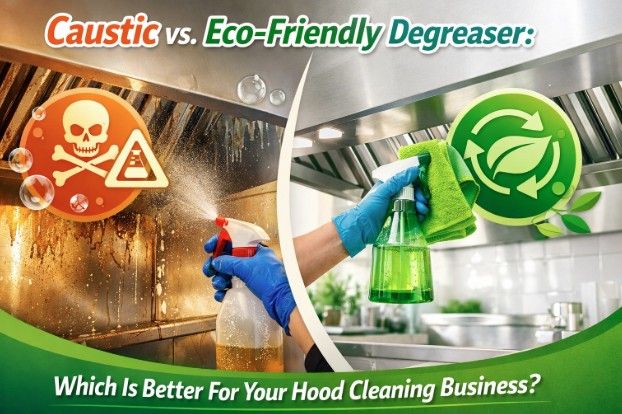
Caustic vs. Eco-Friendly Degreaser: Which Is Better For Your Hood Cleaning Business?
If you have spent more than five minutes in the commercial hood cleaning industry, you know the drill. You walk into a kitchen after hours, and you are greeted by a layer of grease so thick it looks like it has its own heartbeat. Your goal is simple: get that steel shining and the system fire-safe before the breakfast shift arrives.
For decades, the "standard" way to handle this was to reach for the heaviest, nastiest caustic chemicals you could find. If it didn't smoke or melt your boots, was it even working? But times have changed. Between tighter EPA regulations, rising insurance premiums, and a workforce that: rightfully: doesn't want to lose their sense of smell by age 40, the industry is shifting.
The debate usually boils down to this: Caustic vs. Eco-Friendly. One is the "old reliable" (if you consider chemical burns reliable), and the other is the modern, hydrogen peroxide-driven powerhouse. At Superior Quality Coatings, we specialize in the science of cleaning, and we’re here to give you the straight talk on why switching your hood cleaning chemicals isn't just a "green" move: it’s a smart business move.
1. The Safety Factor: Your Lungs vs. Their Bottom Line
Let’s start with the most obvious issue: safety. Traditional caustic degreasers are typically loaded with sodium hydroxide or potassium hydroxide. These are highly alkaline substances that don't just "clean" grease; they dissolve organic matter. Unfortunately, your skin, eyes, and lungs are also organic matter.
When you spray a caustic cleaner in a confined space like a kitchen or up a vertical duct, the mist hangs in the air. Even with a respirator, the risk of chemical burns is high. One slip of the hose or a failed seal on a sprayer can lead to an emergency room visit.
Contrast this with an eco friendly degreaser like our Kitchen Ox Pro or GreenOx Renew. These formulas are built on hydrogen peroxide technology. Instead of eating through grease (and flesh), they oxidize it. Hydrogen peroxide-based cleaners are significantly safer for your technicians to handle. They don't produce the same toxic, choking fumes that caustics do. When you prioritize safety, you aren't just being a "nice guy": atively reducing your liability and worker's compensation risks.
2. Environmental Impact: Don't Risk the EPA Knock
In 2026, you cannot afford to be cavalier about where your runoff goes. The Clean Water Act isn't a suggestion; it’s the law. If you are using heavy caustics and that runoff hits a storm drain, you are looking at fines that could potentially shutter your business.
Many municipalities now require hood cleaners to prove they are using biodegradable, non-toxic solutions. Using a 100% enviro-friendly solution means you can breathe easier when the inspector walks by. Our GreenOx Renew formula, for instance, is designed to meet Clean Water Act requirements. It breaks down into water and oxygen. That’s it. No toxic residue, no hazardous byproduct, and no frantic calls to an environmental cleanup crew because a seal leaked in the parking lot.
3. The Science of Effectiveness: How Oxygen Beats Acid
The biggest myth in the industry is that "Eco-friendly means it doesn't work as well." That might have been true twenty years ago when people were trying to clean commercial fryers with lemon juice and vinegar, but the chemistry has evolved.
Caustics work through a process called saponification: essentially turning grease into soap. It’s effective, but it’s messy and requires massive amounts of water to rinse away the slippery residue.
Hydrogen peroxide-based cleaners work differently. They penetrate the molecular bonds of the grease and organic soils, breaking them down into water and oxygen. Because the formula is "active," it literally lifts the grease off the surface. When you use high-quality hood cleaning chemicals backed by real science, you find that you don't need the "burn" to get the "shine."
4. Surface Protection: Stop Killing the Stainless Steel
Commercial kitchen hoods are expensive. While stainless steel is durable, it isn't invincible. Over time, repeated exposure to high-pH caustic cleaners can lead to "pitting" or dulling of the metal surface. This makes the steel more porous, which: ironically: makes it easier for grease to stick to it in the future.
By switching to a pH-balanced, eco-friendly degreaser, you are actually preserving the equipment you’re paid to clean. Your clients will notice that their hoods look newer for longer. Providing a service that protects the client's investment is a major selling point that sets you apart from the "splash and dash" guys using cheap, corrosive chemicals.
5. Labor Costs: Time is the Only Thing You Can't Buy More Of
If you want to grow your hood cleaning business, you have to master the "dwell time vs. rinse time" equation.
- Caustics: Often require multiple applications, long dwell times, and an eternity of rinsing to ensure the slippery, soapy residue is gone. If you don't rinse a caustic perfectly, it leaves white streaks that look terrible once the hood dries.
- SQC Eco-Friendly Solutions: Our formulas are designed for faster dwell times and, more importantly, much easier rinsing. Because we aren't creating a saponified "soap" layer, the grease rinses away freely with less water.
Less time spent rinsing means your crew gets off-site faster. If you can shave 30 minutes off every job, that’s an extra job per week, or a significantly better margin on your existing contracts. You can learn more about our specific cleaning lines at Clenzo Cleaners.
6. Your Professional Image: The "Green" Marketing Edge
Restaurants are under more pressure than ever to show they are environmentally conscious. From farm-to-table sourcing to eliminating plastic straws, the "Green" movement is a massive marketing tool for your clients.
When you bid on a contract, being able to say, "We use 100% biodegradable, hydrogen peroxide-based cleaners that are safe for your staff and the environment," gives you a massive leg up. It’s a value-add. You aren't just the "hood guy"; you are a professional water management and cleaning consultant.
Many high-end restaurant chains and government facilities specifically look for contractors who use eco-friendly products. By aligning your business with Superior Quality Coatings, you’re not just buying soap; you’re buying a reputation.
7. The Founder’s Edge: 31 Patents Don't Lie
At Superior Quality Coatings, we don't just white-label someone else's dish soap. Our founder, Greg Tatum, has spent decades in the trenches of chemical manufacturing. With 31 patents backing our various formulas, we approach cleaning from a molecular level.
We know the frustrations of the field because we’ve been there. We know that if a product is safe but doesn't clean, it’s useless. And if it cleans but destroys your equipment and health, it’s dangerous. Our goal was to find the "sweet spot" where high-performance chemistry meets environmental safety. You can read more about our journey and commitment to quality on our About Us page.
The Verdict: Which Is Better?
If you want to stay stuck in the 1990s, keep buying the cheapest caustic drum you can find and hope your insurance doesn't go up. But if you want to run a modern, efficient, and profitable hood cleaning business, the choice is clear.
Eco-friendly degreasers offer:
- Superior Safety: Fewer injuries and lower liability.
- Regulatory Compliance: No EPA headaches or storm drain fines.
- Equipment Longevity: Happy clients with shiny hoods.
- Better Margins: Faster rinse times and less labor.
It’s time to stop punishing your lungs and start rewarding your bottom line.
Ready to Upgrade Your Chemical Game?
Don't just take our word for it: see the results for yourself. Whether you are looking for the best hood cleaning chemicals on the market or you're interested in Private Labeling your own line of eco-friendly cleaners, we are here to help.
Check out our full range of professional cleaning solutions at Superior Quality Coatings or Contact Us today to talk shop. Let's get your business running cleaner, safer, and faster.
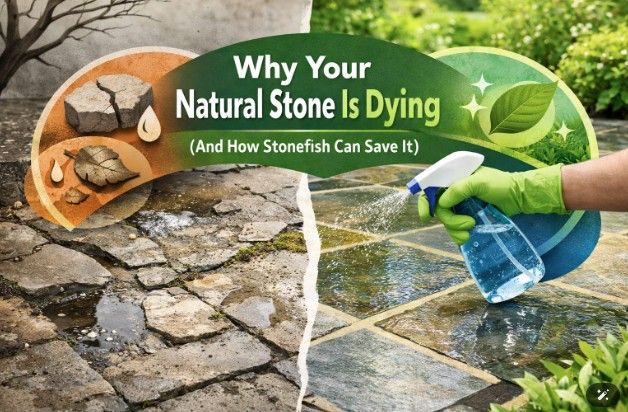
Why Your Natural Stone Is Dying (And How Stonefish Can Save It)
When you install natural stone: whether it’s a sprawling travertine pool deck, a slate walkway, or a flagstone patio: you aren’t just "landscaping." You are making a significant financial investment. Natural stone is one of the most expensive building materials on the market, prized for its unique textures, earthy tones, and the prestige it adds to a property.
However, there is a common misconception among homeowners and even some general contractors: the idea that stone is "permanent" and "indestructible."
The truth is much harsher. Without the right protection, natural stone begins to "die" the moment it is exposed to the elements. It fades, it stains, it cracks, and eventually, it degrades to the point where the only solution is a complete tear-out and replacement. At Superior Quality Coatings, we’ve seen $30,000 patios turn into chalky, gray eyesores in less than five years.
But it doesn't have to be that way. By understanding the chemistry of stone decay and using professional-grade tools like Stonefish Stone Enhancer, you can lock in that "day-one" look for decades.
The Silent Killers of Natural Stone
To understand why your stone is dying, you have to look at it under a microscope. Natural stone is incredibly porous. It is essentially a solid sponge. These microscopic pores are the entry points for the "silent killers" of stone.
1. Moisture and Subflorescence
Moisture is the leading cause of stone deterioration. When water enters the pores, it carries dissolved salts and minerals. When the water evaporates, those salts stay behind and crystallize. If they crystallize on the surface, you get "efflorescence" (that white, powdery film). If they crystallize inside the pores, the pressure of the growing crystals can actually snap the internal structure of the stone. This is known as subflorescence, and it leads to spalling: where the face of the stone literally flakes off.
2. UV Degradation and Fading
Natural stone gets its color from organic minerals. Constant exposure to UV rays acts like a bleach. Over time, those vibrant deep browns, oranges, and tans in your travertine or slate turn into a dull, washed-out gray. This isn't just a cosmetic issue; the loss of these minerals often coincides with the stone becoming more brittle.
3. Chemical Attack and Staining
From acidic rain to bird droppings and spilled wine, your stone is under constant chemical assault. Because stone is porous, a spill doesn't stay on the surface: it gets pulled deep into the matrix of the rock. Once a stain is "set" inside the stone, it is nearly impossible to remove without aggressive grinding or chemical stripping.
The Travertine Trap: Why Some Stones Die Faster
Travertine is arguably the most popular choice for high-end outdoor living spaces, but it is also one of the most vulnerable. It is a form of limestone deposited by mineral springs, characterized by its "pockmarks" and holes.
Because travertine is highly calcareous (meaning it’s made mostly of calcium carbonate), it is extremely sensitive to acids and water. If you don't seal travertine with a high-performance product, the soft minerals within the stone will wash away over time, making the holes larger and the surface rougher. This is the "death" of the stone: the loss of its structural integrity and its aesthetic appeal.
Enter Stonefish: The Professional’s Solution
If you want to save your stone, you can't rely on "big box" store sealers. Most retail sealers are water-based acrylics that sit on top of the stone like a thin layer of plastic wrap. They peel, they turn white when they get wet, and they don't actually penetrate the pores.
Stonefish is different. It is a heavy-duty, solvent-based silane-siloxane enhancer designed specifically for the rigors of natural stone.
The Chemistry of Protection
Stonefish doesn't just "coat" the stone; it bonds with it. Because it is solvent-based, it has a much smaller molecular structure than water-based sealers. This allows it to dive deep into the pores of the travertine, slate, or flagstone.
The silane-siloxane chemistry creates a hydrophobic (water-hating) barrier at a molecular level. Instead of soaking in, water beads up and rolls off. This effectively stops the cycle of subflorescence and prevents freeze-thaw damage, as there is no water inside the stone to expand when it freezes.
The "Pop" Factor: Color Enhancement
One of the biggest reasons contractors choose Stonefish is the visual result. It is an enhancer, meaning it brings out the hidden depth of the stone’s natural colors. It provides that "wet look" where the reds are redder and the browns are deeper, but without the artificial, plastic-like shine of a high-gloss topical sealer. It makes the stone look healthy and vibrant.
Why Stonefish is a Contractor’s Best Friend
If you are a professional in the cleaning and sealing industry, efficiency is just as important as quality. You need a product that works the first time and covers a lot of ground.
- Incredible Coverage: Stonefish offers an industry-leading coverage rate of approximately 1,000 square feet per gallon. This makes it incredibly cost-effective for large commercial projects or expansive residential estates.
- Heavy-Duty Stain Resistance: Once Stonefish is cured, the stone is protected against oil, grease, and food spills. This is essential for outdoor kitchens and pool areas.
- Long-Lasting Durability: Because the protection is inside the stone rather than on top, it doesn't "walk off" in high-traffic areas.
You can learn more about our full range of professional sealers at our Sealers page.
The Economics of Maintenance: Cheap Protection vs. Expensive Restoration
Many property owners hesitate at the cost of professional sealing. However, the math tells a very different story.
Let's look at a typical 1,000-square-foot natural stone patio:
- Cost of Sealing with Stonefish: Between the product cost and labor, you are looking at a relatively small maintenance expense every 3–5 years.
- Cost of Restoration: If the stone is allowed to "die" (fade and pit), it must be professionally ground down and polished. This process is incredibly dusty, loud, and can cost ten times more than a simple seal coat.
- Cost of Replacement: If the stone spalls and cracks beyond repair, replacement is the only option. Between demolition, debris removal, new materials, and labor, you are looking at a massive financial hit.
Maintenance isn't an "extra" expense: it is an insurance policy for your property value.
How to Apply Stonefish Like a Pro
To get the best results and ensure your stone lives a long life, follow these professional steps:
- Clean Thoroughly: Use a high-quality cleaner like our Clenzo line to remove all dirt, mold, and previous failing sealers.
- Dry Completely: Because Stonefish is solvent-based, the stone must be bone-dry. Any moisture trapped inside will prevent the sealer from bonding.
- Apply Evenly: Use a pump sprayer or a solvent-rated roller. Because of the 1,000 sq ft/gal coverage, a little goes a long way.
- Wipe Excess: After 5–10 minutes, wipe off any excess sealer that hasn't soaked in. This prevents "tackiness" and ensures a uniform finish.
Save Your Stone Today
Natural stone is a piece of the earth brought to your doorstep. It has character, history, and beauty. Don't let it fade away into a chalky mess. By using Stonefish, you are providing the heavy-duty protection and color enhancement that natural stone requires to thrive in harsh environments.
Whether you are a homeowner looking to protect your investment or a contractor looking for the best product for your clients, Superior Quality Coatings is here to help.
Ready to bring your stone back to life? Contact us today to learn more about Stonefish or to find a distributor near you. You can also explore our About Us page to see why we are the trusted name in chemical manufacturing for the coating industry.
Don't wait until the cracks appear. Protect your investment, enhance your curb appeal, and stop the decay before it starts.
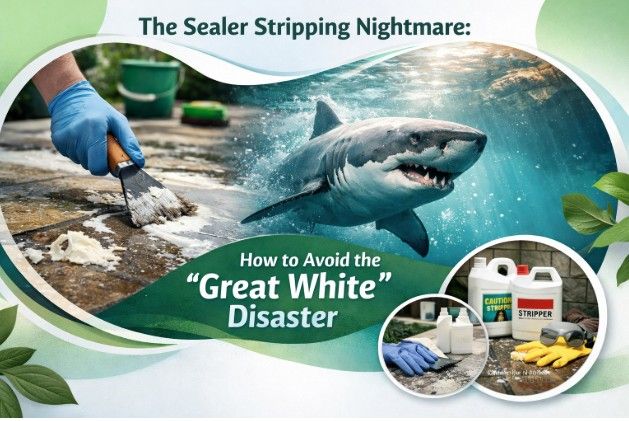
If you’ve been in the paver sealing business for more than a week, you know the feeling. You pull up to a driveway that’s hazy, peeling, and looking like a frost-covered windshield in the middle of a Florida July. You know exactly what’s coming: a stripping job. Let’s be honest, stripping old, failing sealer is the job every contractor dreads. It’s back-breaking, it’s messy, and if you don’t have the right chemistry in your trailer, it’s a fast track to losing money on a job you thought would be a "quick win." At Superior Quality Coatings, we talk to contractors every day who are battling the "Great White" disaster. No, we’re not talking about sharks. We’re talking about that stubborn, white, milky residue that refuses to leave the pores of the stone, no matter how many times you hit it with a surface cleaner. Here is the straight talk on why stripping goes wrong and how Great White Stripper is the game-changer you need to turn a nightmare into a payday. Why Stripping is the Ultimate Contractor Headache Most guys get into paver sealing because they love the "before and after." It’s satisfying to take a dull, grey patio and make it pop with a high-gloss finish. But stripping? Stripping is the opposite of satisfying. It’s the forensic cleanup of someone else’s mistake. The nightmare usually starts with an inferior product or a "DIY special." Maybe the previous guy used a cheap solvent-based sealer in high humidity. Maybe they trapped moisture. Or maybe they just kept slapping coat after coat on top of old sealer until the pavers couldn’t breathe. When you show up to fix it, you’re dealing with: The Multi-Pass Trap: Using weak over-the-counter strippers that require three, four, or five applications. The Sludge Factor: Turning old sealer into a sticky, gooey mess that just migrates from one paver to the next. The Ghosting Effect: Thinking you’re done, letting it dry, and watching that white haze reappear like a ghost. The "Great White" Disaster: When Chemistry Fails The "Great White" disaster happens when your stripper isn't strong enough to fully emulsify the old resin. You end up with a surface that looks "mostly clean" while wet, but as soon as the water evaporates, you’re left with white spots, streaks, and a substrate that won't accept a new coat of sealer. If you try to seal over that residue, you’re just burying the problem. Within six months, the new sealer will delaminate, and you’ll be back on that same driveway: this time for free, because it’s a warranty call. To avoid this, you need a chemical that doesn't just soften the sealer; it needs to break the molecular bond between the resin and the paver. Enter Great White Stripper: The Nightmare Killer We developed Great White Stripper specifically because we were tired of seeing contractors struggle with inferior chemicals. We wanted something that had the "bite" of old-school strippers without the insane toxicity of products like methylene chloride, which are increasingly being restricted or banned. Great White Stripper is designed to be a high-performance, professional-grade solution that handles the toughest solvent-based and water-based acrylics. Why it’s the standard for pros: Speed: It starts working the moment it hits the surface. You don’t have to wait half a day to see results. Efficiency: In most cases, it reduces the job to a single application. If you’re used to doing two or three passes with other brands, you’ve just doubled your hourly rate by switching. Complete Removal: It reaches deep into the pores of the pavers to lift out the "white" that causes the haze. Labor is Your Biggest Expense: Stop Wasting It As a business owner, your most expensive asset is your time (or your crew’s time). If a stripping job takes eight hours because your chemicals are weak, you aren’t making money. You’re just paying for the privilege of working hard. When you use Great White Stripper from Superior Quality Coatings, you’re investing in your margins. If you can knock out a stripping job in four hours instead of eight, that’s another half-day you can put toward a fresh install or another sealing project. The goal isn't just to get the sealer off; it's to get it off the first time. How to Strip Like a Pro (And Avoid the Mess) Even with the best chemicals, technique matters. Here is the "Straight-Talk" workflow for using Great White Stripper to avoid a disaster: 1. The Dry Test Never start stripping a damp surface. The pavers need to be dry so the stripper can penetrate the sealer. If the pores are full of water, the chemical can't get in to do its job. 2. Application Apply Great White Stripper evenly. Don't be stingy. You want a consistent coat that stays wet. If the stripper dries out before you wash it off, it will re-bond to the surface, and you’re back to square one. 3. Dwell Time Give the chemistry time to work. Depending on the thickness of the old sealer, this could be anywhere from 15 to 45 minutes. Watch for the sealer to "wrinkle" or turn into a slushy consistency. 4. The Pressure Wash Use a professional-grade pressure washer with a turbo nozzle or a surface cleaner, depending on the substrate. Start from the highest point and work the "sludge" toward the drainage area. 5. The Prep Wash After the sealer is gone, you need to clean the slate. This is where we recommend a follow-up with a product like GreenOx Renew. It’s an EPA Safer Choice product that uses hydrogen peroxide to lift any remaining organic stains and neutralize the surface, ensuring your new paver sealer has the perfect environment to bond. Don’t Just Take Our Word For It The guys who are out in the field every day: the "Seal Team" pros: know that the right product makes the difference between a five-star review and a customer complaint. We’ve built our reputation on providing the best chemistry for the best applicators. When you see reviews like the one above from Paver Mgmt Group, it’s because they’ve stopped fighting their chemicals and started using tools that work for them. Superior Quality: More Than Just Chemicals At Superior Quality Coatings, we don't just ship you a pallet of Great White and wish you luck. We provide the support you need to grow your business. Whether you are looking for private labeling to build your own brand or you want to attend the SEAL Team Academy to master the art of color restoration and sealing, we are here to help. The "Great White" disaster is preventable. It starts with choosing a chemical that respects your time and your reputation. Stop dreading the stripping jobs. With the right approach and the right stripper, you can turn those "nightmare" leads into your most profitable projects. Ready to upgrade your chemical game? Check out our full line of professional cleaners and sealers at Superior Quality Coatings. If you’ve used Great White and it saved your bacon on a job, we’d love to hear about it: leave us a review and let the community know. Summary: The Contractor’s Path to Sanity Avoid the cheap stuff: Inferior strippers lead to multiple passes and "ghosting" haze. Trust the chemistry: Great White Stripper is engineered to break the bond of tough resins in one pass. Time is profit: Cutting your labor time in half is the fastest way to increase your day rate. Prep is key: Use GreenOx Renew after stripping to ensure a pristine surface for your new coating. Get trained: Join the SEAL Team Academy to stay ahead of the competition and handle the "nightmare" jobs with confidence. Don't let a stripping job ruin your week. Attack it with the Great White and get back to doing what you do best( making surfaces look incredible.)
If you’ve been in the paver sealing business for more than a week, you know the feeling. You pull up to a driveway that’s hazy, peeling, and looking like a frost-covered windshield in the middle of a Florida July. You know exactly what’s coming: a stripping job.
Let’s be honest, stripping old, failing sealer is the job every contractor dreads. It’s back-breaking, it’s messy, and if you don’t have the right chemistry in your trailer, it’s a fast track to losing money on a job you thought would be a "quick win."
At Superior Quality Coatings, we talk to contractors every day who are battling the "Great White" disaster. No, we’re not talking about sharks. We’re talking about that stubborn, white, milky residue that refuses to leave the pores of the stone, no matter how many times you hit it with a surface cleaner.
Here is the straight talk on why stripping goes wrong and how Great White Stripper is the game-changer you need to turn a nightmare into a payday.
Why Stripping is the Ultimate Contractor Headache
Most guys get into paver sealing because they love the "before and after." It’s satisfying to take a dull, grey patio and make it pop with a high-gloss finish. But stripping? Stripping is the opposite of satisfying. It’s the forensic cleanup of someone else’s mistake.
The nightmare usually starts with an inferior product or a "DIY special." Maybe the previous guy used a cheap solvent-based sealer in high humidity. Maybe they trapped moisture. Or maybe they just kept slapping coat after coat on top of old sealer until the pavers couldn’t breathe.
When you show up to fix it, you’re dealing with:
- The Multi-Pass Trap: Using weak over-the-counter strippers that require three, four, or five applications.
- The Sludge Factor: Turning old sealer into a sticky, gooey mess that just migrates from one paver to the next.
- The Ghosting Effect: Thinking you’re done, letting it dry, and watching that white haze reappear like a ghost.
The "Great White" Disaster: When Chemistry Fails
The "Great White" disaster happens when your stripper isn't strong enough to fully emulsify the old resin. You end up with a surface that looks "mostly clean" while wet, but as soon as the water evaporates, you’re left with white spots, streaks, and a substrate that won't accept a new coat of sealer.
If you try to seal over that residue, you’re just burying the problem. Within six months, the new sealer will delaminate, and you’ll be back on that same driveway: this time for free, because it’s a warranty call.
To avoid this, you need a chemical that doesn't just soften the sealer; it needs to break the molecular bond between the resin and the paver.
Enter Great White Stripper: The Nightmare Killer
We developed Great White Stripper specifically because we were tired of seeing contractors struggle with inferior chemicals. We wanted something that had the "bite" of old-school strippers without the insane toxicity of products like methylene chloride, which are increasingly being restricted or banned.
Great White Stripper is designed to be a high-performance, professional-grade solution that handles the toughest solvent-based and water-based acrylics.
Why it’s the standard for pros:
- Speed: It starts working the moment it hits the surface. You don’t have to wait half a day to see results.
- Efficiency: In most cases, it reduces the job to a single application. If you’re used to doing two or three passes with other brands, you’ve just doubled your hourly rate by switching.
- Complete Removal: It reaches deep into the pores of the pavers to lift out the "white" that causes the haze.
Labor is Your Biggest Expense: Stop Wasting It
As a business owner, your most expensive asset is your time (or your crew’s time). If a stripping job takes eight hours because your chemicals are weak, you aren’t making money. You’re just paying for the privilege of working hard.
When you use Great White Stripper from Superior Quality Coatings, you’re investing in your margins. If you can knock out a stripping job in four hours instead of eight, that’s another half-day you can put toward a fresh install or another sealing project.
The goal isn't just to get the sealer off; it's to get it off the first time.
How to Strip Like a Pro (And Avoid the Mess)
Even with the best chemicals, technique matters. Here is the "Straight-Talk" workflow for using Great White Stripper to avoid a disaster:
1. The Dry Test
Never start stripping a damp surface. The pavers need to be dry so the stripper can penetrate the sealer. If the pores are full of water, the chemical can't get in to do its job.
2. Application
Apply Great White Stripper evenly. Don't be stingy. You want a consistent coat that stays wet. If the stripper dries out before you wash it off, it will re-bond to the surface, and you’re back to square one.
3. Dwell Time
Give the chemistry time to work. Depending on the thickness of the old sealer, this could be anywhere from 15 to 45 minutes. Watch for the sealer to "wrinkle" or turn into a slushy consistency.
4. The Pressure Wash
Use a professional-grade pressure washer with a turbo nozzle or a surface cleaner, depending on the substrate. Start from the highest point and work the "sludge" toward the drainage area.
5. The Prep Wash
After the sealer is gone, you need to clean the slate. This is where we recommend a follow-up with a product like GreenOx Renew. It’s an EPA Safer Choice product that uses hydrogen peroxide to lift any remaining organic stains and neutralize the surface, ensuring your new paver sealer has the perfect environment to bond.
Don’t Just Take Our Word For It
The guys who are out in the field every day: the "Seal Team" pros: know that the right product makes the difference between a five-star review and a customer complaint. We’ve built our reputation on providing the best chemistry for the best applicators.
When you see reviews like the one above from Paver Mgmt Group, it’s because they’ve stopped fighting their chemicals and started using tools that work for them.
Superior Quality: More Than Just Chemicals
At Superior Quality Coatings, we don't just ship you a pallet of Great White and wish you luck. We provide the support you need to grow your business. Whether you are looking for private labeling to build your own brand or you want to attend the SEAL Team Academy to master the art of color restoration and sealing, we are here to help.
The "Great White" disaster is preventable. It starts with choosing a chemical that respects your time and your reputation.
Stop dreading the stripping jobs. With the right approach and the right stripper, you can turn those "nightmare" leads into your most profitable projects.
Ready to upgrade your chemical game?
Check out our full line of professional cleaners and sealers at Superior Quality Coatings. If you’ve used Great White and it saved your bacon on a job, we’d love to hear about it: leave us a review and let the community know.
Summary: The Contractor’s Path to Sanity
- Avoid the cheap stuff: Inferior strippers lead to multiple passes and "ghosting" haze.
- Trust the chemistry: Great White Stripper is engineered to break the bond of tough resins in one pass.
- Time is profit: Cutting your labor time in half is the fastest way to increase your day rate.
- Prep is key: Use GreenOx Renew after stripping to ensure a pristine surface for your new coating.
- Get trained: Join the SEAL Team Academy to stay ahead of the competition and handle the "nightmare" jobs with confidence.
Don't let a stripping job ruin your week. Attack it with the Great White and get back to doing what you do best( making surfaces look incredible.)
Florida Roofs are Brutal: Why the 500 Series Silicone/Acrylic Blend is the Best Defense
If you're a contractor working in Florida, you already know what the climate does to roofs. Extreme heat, relentless UV rays, and humidity levels that seem to invite every kind of mildew and algae growth: Florida roofs take a beating year-round. Traditional coatings can crack, peel, or fail within a few years, leaving your clients frustrated and your reputation at risk.
The right roof coating makes all the difference. Superior Quality Coatings offers the Roof Coat 500 Series, a silicone/acrylic blend specifically formulated to handle Florida's toughest conditions. This product delivers superior water resistance, UV protection, and long-term durability: all backed by a 5-year warranty. But before you reach for just any coating, you need to understand why this blend outperforms standard options and what makes it the best defense for sloped roofs in the Sunshine State.
The Unique Challenges Florida Roofs Face
Florida's climate creates a perfect storm of roofing challenges. Unlike roofs in other parts of the country, Florida roofs endure:
Extreme Heat: Summer temperatures regularly exceed 90°F, and roof surface temperatures can climb well above 150°F. This constant thermal stress causes many coatings to become brittle, crack, or lose adhesion over time.
Intense UV Radiation: Florida receives some of the highest UV exposure in the United States. UV rays break down the molecular structure of many roofing materials, leading to chalking, fading, and premature failure.
High Humidity and Moisture: With humidity levels averaging 70-80% during summer months and frequent heavy rainfall, moisture infiltration is a constant threat. This humidity creates ideal conditions for mildew, algae, and moss growth, which can deteriorate roofing materials and create unsightly staining.
Hurricane-Force Winds and Storm Damage: Florida's hurricane season brings powerful winds and driving rain that can exploit any weakness in a roof coating. A coating must maintain flexibility and adhesion even under extreme stress.
These factors don't work in isolation: they compound each other. Heat accelerates UV degradation, humidity promotes biological growth, and storms test every vulnerable point. Your clients need a coating that addresses all these challenges simultaneously.
Understanding the Silicone/Acrylic Blend Technology
The Superior Quality Coatings Roof Coat 500 Series uses a hybrid formulation that combines the best properties of two proven technologies: silicone and acrylic resins.
Silicone's Role: Silicone provides exceptional water resistance and UV stability. Unlike many coatings that absorb water over time, silicone creates a hydrophobic barrier that causes water to bead and run off the surface. This water resistance is critical for preventing moisture infiltration and the resulting mildew growth. Silicone also remains stable under intense UV exposure, resisting the chalking and breakdown that affects many other coating types.
Acrylic's Contribution: While silicone excels at protection, acrylic brings superior adhesion and durability. Acrylic resins bond tenaciously to roofing substrates, creating a strong mechanical and chemical bond that won't delaminate under thermal cycling. Acrylic also provides excellent film integrity, resisting cracking and maintaining flexibility across a wide temperature range.
The Hybrid Advantage: By combining these technologies, the 500 Series delivers benefits that neither component could achieve alone. You get the water and UV resistance of silicone with the adhesion and durability of acrylic: a complete defense system against Florida's climate.
This formulation also includes mildewcides that actively resist biological growth. In Florida's humid environment, this feature prevents the dark staining and deterioration that often plagues untreated roof surfaces.
Key Benefits That Matter to Your Business
When you choose the Roof Coat 500 Series, you're providing your clients with measurable advantages:
5-Year Warranty Protection: Superior Quality Coatings backs this product with a comprehensive 5-year warranty. This gives your clients peace of mind and protects your business from costly callbacks. You can bid jobs confidently knowing the coating will perform as promised.
Mildew Resistance: The anti-microbial properties built into the 500 Series prevent the organic growth that creates black streaks and roof staining. Your clients will maintain better curb appeal, and you won't receive calls about premature discoloration.
Superior UV Resistance: The silicone component provides exceptional UV stability, preventing the chalking, fading, and breakdown common with standard acrylic coatings. This means longer service life and better color retention.
Water Protection: The hydrophobic nature of the silicone creates an effective moisture barrier, preventing water infiltration that can lead to substrate damage, leaks, and accelerated wear.
Flexibility Under Stress: Florida's temperature swings: from air-conditioned interiors to scorching summer heat: create expansion and contraction cycles that can crack rigid coatings. The 500 Series maintains flexibility, accommodating substrate movement without cracking or peeling.
Critical Application Requirement: Sloped Roofs Only
Before applying the Roof Coat 500 Series, you must understand this important limitation: this product is formulated for sloped roofs only and must NOT be used on flat or low-slope roofs.
The 500 Series is engineered for proper water drainage that occurs naturally on sloped roofing systems. Flat roofs present entirely different waterproofing challenges, including standing water and ponding issues that require specialized membrane systems.
Using this coating on a flat roof will void the warranty and can lead to premature failure. If you're working on flat or low-slope applications, contact Superior Quality Coatings to discuss appropriate alternatives designed specifically for those conditions.
Always verify the roof pitch before beginning your project. When in doubt, consult with Superior Quality Coatings' technical team to ensure you're using the right product for your specific application.
How the 500 Series Compares to Standard Coatings
Many contractors default to basic acrylic or elastomeric coatings because of familiarity or lower initial cost. However, these products often fail to deliver in Florida's extreme environment.
Standard acrylic coatings, while offering good adhesion, typically lack the UV stability and water resistance needed for long-term performance in Florida. They tend to chalk, fade, and break down within 2-3 years of exposure to intense sun and humidity.
Pure silicone coatings provide excellent weather resistance but can present adhesion challenges and higher material costs. They also require specialized application techniques that many contractors find difficult.
The 500 Series silicone/acrylic blend offers the middle path: superior protection without the drawbacks of either component used alone. You get easier application than pure silicone, better weather resistance than standard acrylic, and a price point that makes sense for both you and your clients.
Application Best Practices
To achieve optimal performance from the Roof Coat 500 Series, proper surface preparation is essential. The substrate must be clean, dry, and free from loose material, dirt, mildew, or previous coating failures.
Start with a thorough cleaning using appropriate methods for your substrate. For heavily soiled surfaces or those with biological growth, consider using a hydrogen peroxide-based cleaner that won't leave harmful residues. Allow the surface to dry completely before coating: moisture trapped under the coating can lead to adhesion problems and premature failure.
Apply the 500 Series according to manufacturer specifications for temperature, humidity, and film thickness. Florida's heat can cause rapid drying, so plan your application during cooler parts of the day when possible. Multiple thin coats typically perform better than a single heavy application.
Always inspect the forecast before beginning work. The coating needs adequate cure time before exposure to rain, which can be challenging during Florida's summer afternoon thunderstorm season.
The Superior Quality Coatings Difference
When you partner with Superior Quality Coatings, you're getting more than just a product: you're accessing a team dedicated to your success. The company's technical support staff can help you select the right coating for each specific project, troubleshoot application challenges, and ensure you're maximizing product performance.
Superior Quality Coatings manufactures a complete line of professional-grade coatings, cleaners, and sealers designed for demanding commercial and residential applications. Whether you're sealing pavers, cleaning surfaces, or protecting roofs, you'll find products engineered for real-world conditions.
The 5-year warranty on the Roof Coat 500 Series reflects the company's confidence in product performance. This level of backing is uncommon in the industry and demonstrates a commitment to quality that protects both you and your clients.
Protect Your Florida Projects
Florida's climate doesn't give roofs any breaks. The combination of extreme heat, UV radiation, and humidity creates conditions that quickly expose inferior coatings. Your reputation depends on using products that perform year after year, not products that fail within the first season.
The Superior Quality Coatings Roof Coat 500 Series silicone/acrylic blend is specifically formulated to meet these challenges. With superior UV resistance, effective moisture protection, built-in mildew resistance, and a 5-year warranty, it provides the defense your sloped roof projects need.
Don't let another Florida summer damage your reputation with coating failures and callbacks. Contact Superior Quality Coatings at https://www.superiorqualitycoatings.com/contact-us to discuss how the 500 Series can protect your next roofing project. Their team will help you select the right products and provide the technical support you need for successful applications.
When it comes to Florida roofs, settling for standard coatings is settling for failure. Choose the 500 Series and give your clients the lasting protection they deserve.
The Contractor's Guide to EPA Safer Choice: Why It Matters For Pressure Washing & Hood Cleaning Jobs
If you're a contractor in the pressure washing, hood cleaning, or marina maintenance space, you know the products you use directly affect your health, your crew's safety, and your customers' properties. The EPA Safer Choice label provides a clear benchmark for identifying cleaning products that work without compromising safety or environmental standards. Understanding what this certification means: and why it matters: can help you make smarter product choices that protect your business and your reputation.
What Is EPA Safer Choice?
The EPA Safer Choice program is a certification system that identifies products made with safer chemical ingredients. Every ingredient in a Safer Choice-certified product undergoes rigorous evaluation by EPA scientists. These products cannot contain chemicals linked to cancer, reproductive toxicity, aquatic harm, or other hazardous outcomes. The program sets a high bar for transparency and safety, ensuring that when you see the Safer Choice label, you're using a product that has been thoroughly vetted.
For contractors, this certification removes guesswork. You don't need to decode complex safety data sheets or wonder if a product is as safe as it claims. The EPA has already done that work. When you choose a Safer Choice product, you're choosing a cleaner that meets stringent federal standards for human health and environmental protection.
Why Contractors Should Care About Safer Choice Certification
Your daily exposure to cleaning chemicals is far higher than that of the average consumer. Whether you're spraying down commercial kitchens, cleaning boat docks, or pressure washing exterior surfaces, you're handling concentrated formulas in enclosed or outdoor environments. Traditional cleaning products often rely on harsh solvents, bleach, or other aggressive chemicals that can irritate skin, damage respiratory systems, and create long-term health risks.
Safer Choice certification addresses these concerns head-on. Products carrying this label reduce your exposure to hazardous substances while still delivering the cleaning power your jobs demand. This is especially relevant for hood cleaning, where ventilation can be limited, and for marina work, where runoff directly impacts aquatic ecosystems.
Beyond personal safety, there's a growing demand from property managers, facility owners, and environmentally conscious clients for contractors who use safer products. Demonstrating that you prioritize health and environmental responsibility can differentiate your business in a competitive market.
Green Ox Renew: A Hydrogen Peroxide-Based Cleaner with Safer Choice Certification
Superior Quality Coatings offers Green Ox Renew, a hydrogen peroxide-based cleaner that carries the EPA Safer Choice label. This product is designed specifically for contractors who need effective cleaning without the environmental and health risks associated with traditional chemicals. Green Ox Renew is used as a prep step before sealing, but it's also a powerful standalone cleaner for a variety of surfaces.
Hydrogen peroxide-based cleaners work by breaking down organic matter: including grease, mold, mildew, and algae: into harmless byproducts such as water and oxygen. This chemical process ensures that the cleaner is effective while remaining non-toxic. For contractors working near water sources, landscaping, or in residential areas, this means you can clean without worrying about contaminating soil, plants, or aquatic life.
Green Ox Renew meets Clean Water Act requirements, making it safe for use in marina environments and other sensitive areas. It does not require extensive pre-soaking of plants, reduces the amount of water needed for rinsing, and simplifies your workflow. The product is easy to apply: spray, let it dwell, and rinse. There's no need for complicated mixing or additional steps.
The Benefits of Using Safer Choice Products in Your OperationsSafer for the Applicator
Your health is your most valuable asset. Traditional cleaning chemicals can cause skin burns, respiratory irritation, and long-term exposure risks. Safer Choice products minimize these hazards. Green Ox Renew, for example, is non-toxic and does not emit harsh fumes. This makes it safer to use in confined spaces like commercial kitchens or enclosed boat docks where ventilation may be limited.
Reducing chemical exposure also lowers your liability. Worker safety claims and health issues can be costly for your business. Using certified safer products demonstrates that you take crew safety seriously and can help mitigate these risks.
Better for the Environment
Runoff from cleaning jobs doesn't disappear: it flows into storm drains, waterways, and surrounding landscapes. Traditional cleaners containing phosphates, chlorine, or harsh solvents can harm aquatic ecosystems and contaminate groundwater. Safer Choice products are formulated to break down into non-toxic byproducts, reducing environmental impact.
Green Ox Renew's hydrogen peroxide formula is particularly well-suited for marina maintenance and waterfront properties. When the cleaner breaks down, it leaves behind water and oxygen: substances that are naturally present in the environment. This means you can clean effectively without contributing to pollution or violating environmental regulations.
Highly Effective Compared to Harsh Chemicals
A common misconception is that safer products sacrifice performance. This is not the case. Hydrogen peroxide-based cleaners like Green Ox Renew are highly effective at removing organic growth, grease, and grime. The oxidation process breaks down contaminants at a molecular level, providing deep cleaning without the need for aggressive scrubbing or repeated applications.
Contractors report that Green Ox Renew delivers excellent results on wood siding, docks, decks, and other surfaces. The product's effectiveness reduces labor time and allows you to complete jobs more efficiently. You don't have to choose between safety and performance: you can have both.
Compliance with Environmental Regulations
Environmental regulations are becoming stricter, particularly in coastal and waterfront areas. Using products that meet Clean Water Act standards ensures that your operations remain compliant with federal and state laws. This protects your business from fines, legal issues, and damage to your professional reputation.
Safer Choice certification provides documentation that your cleaning products meet rigorous environmental standards. This can be valuable when bidding on contracts with government agencies, schools, or environmentally focused organizations that require proof of sustainable practices.
Real-World Applications: Pressure Washing, Hood Cleaning, and Marina MaintenancePressure Washing
Pressure washing involves high volumes of water and cleaning solution. When you use traditional chemicals, the runoff can damage landscaping, contaminate soil, and harm beneficial organisms. Green Ox Renew eliminates these concerns. You can pressure wash residential siding, commercial buildings, and outdoor surfaces without worrying about harming nearby plants or grass.
The product's non-toxic formula also means you can work in residential areas without creating health concerns for homeowners, children, or pets. This peace of mind is invaluable, especially for contractors who work in densely populated neighborhoods.
Hood Cleaning
Commercial kitchen hood cleaning involves removing heavy grease buildup in confined, often poorly ventilated spaces. Traditional degreasers contain harsh solvents that can irritate your respiratory system and skin. Green Ox Renew's hydrogen peroxide formula breaks down grease effectively without the fumes or skin contact risks associated with solvent-based cleaners.
Using a Safer Choice product also demonstrates to restaurant owners and facility managers that you prioritize safety: not just for your crew, but for their kitchen staff and customers. This can be a strong selling point when competing for commercial contracts.
Marina Maintenance
Marinas present unique challenges. Cleaning boat docks, slips, and waterfront structures requires products that won't harm fish, plants, or water quality. Green Ox Renew is specifically formulated to be safe for aquatic environments. The hydrogen peroxide breaks down into water and oxygen, leaving no toxic residue behind.
This makes it ideal for cleaning algae, mold, and organic buildup from docks and boat surfaces. You can complete the job knowing that your cleaning process isn't contributing to water pollution or harming marine life.
Superior Quality Coatings' Commitment to Environmentally Friendly Products
Superior Quality Coatings is dedicated to developing product lines that prioritize environmental responsibility without sacrificing performance. The company's founder holds 31 patents, demonstrating a deep commitment to innovation and quality. This expertise is reflected in products like Green Ox Renew, which combine cutting-edge chemistry with environmental stewardship.
The company's eco-friendly cleaning products are designed to meet the real-world demands of professional contractors. This means products that work efficiently, reduce labor costs, and align with evolving environmental standards. When you choose Superior Quality Coatings, you're partnering with a brand that understands the challenges you face and provides solutions that support both your business and the planet.
Making the Switch: What to Consider
If you're currently using traditional cleaning chemicals, transitioning to Safer Choice products may seem like a significant change. However, the benefits far outweigh any initial adjustments. Start by evaluating the products you use most frequently. Identify where you could replace harsh chemicals with safer alternatives without compromising results.
Green Ox Renew is an excellent starting point. Use it for your next pressure washing or marina cleaning job and compare the results to your current products. You'll likely find that it performs as well or better: while also reducing your exposure to hazardous chemicals and protecting the environment.
Document your experience and share it with clients. Property owners and facility managers are increasingly interested in sustainable practices. Showing that you use EPA Safer Choice products can strengthen your proposals and help you win contracts with environmentally conscious clients.
Final Thoughts
The EPA Safer Choice label provides a reliable standard for identifying cleaning products that protect your health, your crew, and the environment. For contractors in pressure washing, hood cleaning, and marina maintenance, using certified products like Green Ox Renew is not just a smart choice: it's a strategic advantage. You reduce chemical exposure, meet environmental regulations, and deliver excellent results without compromising safety.
Superior Quality Coatings is committed to providing innovative, environmentally friendly solutions backed by decades of expertise and 31 patents. When you choose products that carry the Safer Choice label, you're investing in your health, your business, and the future of the industry. Make the switch to safer cleaning products and experience the difference for yourself.
For more information about our eco-friendly product lines, visit our website or contact us directly. Trust the brand that prioritizes both performance and environmental responsibility.
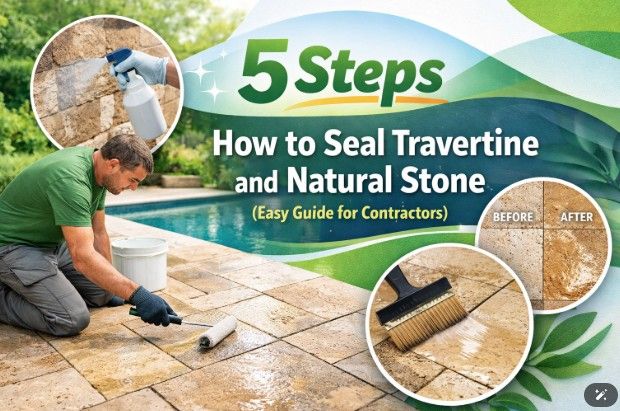
5 Steps How to Seal Travertine and Natural Stone (Easy Guide for Contractors)
Sealing travertine and natural stone isn't just about aesthetics: it's about protecting your client's investment and ensuring the longevity of the surfaces you install or restore. Whether you're working on a high-end outdoor patio, an interior marble floor, or a travertine pool deck, the right sealing process makes all the difference between a job that lasts years and one that requires callbacks.
The challenge? Natural stone is porous, absorbs moisture, and can stain easily without proper protection. But when you follow the right steps and use quality products, you'll deliver a professional finish that stands up to traffic, weather, and time.
Here's your straightforward guide to sealing travertine and natural stone the right way.
Step 1: Clean the Surface Thoroughly
You can't seal dirty stone: period. Any contaminants left on the surface will get trapped under your sealer, leading to discoloration, adhesion problems, and a finish that won't last.
Start by sweeping or blowing off all loose debris. Then deep-clean the entire surface using a pH-neutral cleaner designed for natural stone. Harsh chemicals or acidic cleaners will damage the porous surface and compromise your seal.
For contractors looking for an effective prep cleaner, Green Ox Renew works well for removing organic stains, mildew, and surface contaminants before sealing. It's a hydrogen peroxide-based cleaner that's tough on grime but safe for the environment and surrounding landscaping: important when you're working on outdoor projects near plants or water features.
After cleaning, rinse the surface completely with clean water. This step is critical: any cleaning residue left behind can interfere with sealer penetration and bonding.
Now here's where patience pays off. The stone must be completely dry before you apply any travertine sealer or natural stone sealer. Moisture trapped under the sealer causes clouding, white haze, and reduces the effectiveness of your entire application. For outdoor jobs, use a moisture meter to verify dryness: don't just guess based on how the surface looks or feels.
Step 2: Choose the Right Travertine Sealer or Natural Stone Sealer
Not all sealers are created equal, and choosing the wrong one for your specific stone type can lead to disappointing results.
You have two main categories to consider:
Penetrating sealers soak into the stone's pores and protect from within. These maintain the natural appearance of the stone without changing its color or adding shine. They're ideal when your client wants to preserve the authentic look of travertine, limestone, or other natural materials while still getting protection against moisture and staining.
Topical sealers form a protective layer on the surface. These can add sheen or gloss and are better suited for high-traffic commercial areas where you need maximum surface protection and easier maintenance.
The stone type also matters. Travertine has filled and unfilled varieties: unfilled travertine with its characteristic holes requires more sealer and sometimes multiple applications. Dense stones like granite need less sealer than highly porous materials like sandstone or limestone.
Superior Quality Coatings offers professional-grade options like Stonefish and Mahi that provide reliable protection for various natural stone applications. These products are formulated specifically for contractors who need consistent results across different stone types and job conditions.
Consider the environment too. Indoor applications allow for more sealer options, while outdoor surfaces need UV-resistant formulas that can handle temperature fluctuations and weather exposure.
Step 3: Prepare Your Work Area and Materials
Professional preparation prevents amateur results. Before you open that sealer container, make sure you have everything ready.
Read the manufacturer's instructions completely. Different products have different requirements for dilution, temperature ranges, application methods, and drying times. Some sealers work best at specific temperatures: applying in conditions that are too cold or too hot can affect penetration and curing.
Ensure proper ventilation, especially for indoor applications. Even low-VOC sealers benefit from good airflow during application and initial curing.
Gather your application tools: clean microfiber rollers, brushes, paint pads, or pump sprayers, depending on the surface size and sealer type. Keep clean rags handy for wiping excess sealer and addressing drips immediately.
Protect adjacent surfaces. Mask off areas where sealer shouldn't go: baseboards, walls, other flooring materials. Overspray or roller splatter on unwanted surfaces creates extra work and potential damage.
Test in an inconspicuous area first. This small step can save you from costly mistakes. Apply the sealer to a hidden section to confirm it produces the desired appearance and doesn't cause discoloration or other issues with your specific stone.
Step 4: Apply the Sealer Correctly
Application technique separates professional results from mediocre ones. Work methodically in small sections: trying to cover too much area at once leads to uneven application and lap marks.
For penetrating sealers, apply liberally and allow the product to soak into the stone for the time specified by the manufacturer. Natural stone is thirsty, and it will absorb what it needs. Watch for dry spots where the sealer absorbs quickly: these areas may need additional product. After the recommended dwell time, wipe away any excess sealer that hasn't absorbed. Leaving excess on the surface can create a hazy or sticky residue.
For topical sealers, apply thin, even coats using overlapping strokes. Thick application doesn't mean better protection: it usually means problems like puddling, streaking, or extended drying times.
Most professional applications require multiple coats. The first coat often absorbs more heavily into the stone, while subsequent coats build up the protective barrier. Allow proper drying time between coats as specified by the product instructions: rushing this step compromises the integrity of your seal.
Pay special attention to edges, corners, and grout lines. These areas can absorb sealer differently than field areas, so make sure they receive adequate coverage without over-application that causes buildup.
Work with consistent pressure and speed. Changing your application rhythm creates visible variations in sealer coverage that show up as light and dark areas, especially on lighter-colored stones.
Step 5: Allow Proper Curing Time
This is where contractor patience gets tested: but proper curing is non-negotiable for long-lasting results.
Most sealers need 24 to 72 hours to cure fully, depending on the product formulation, temperature, humidity, and stone type. During this period, the sealer continues to bond with the stone and develop its full protective properties.
Keep foot traffic off the surface during initial curing. Even light traffic can leave marks, scuff the sealer, or prevent proper bonding. For outdoor applications, consider weather forecasts: rain within the first 24 hours can ruin your application and require starting over.
Inform your clients about the complete curing timeline. They need to understand that while the surface may feel dry to the touch after several hours, full curing takes longer. Placing furniture, rugs, or decorative items too soon can trap moisture or create permanent marks in the sealer.
Temperature and humidity affect curing speed. Hot, dry conditions may speed curing but can also cause the sealer to dry too quickly before proper penetration. Cool, humid conditions slow curing and may require extended wait times before the surface is ready for use.
Ongoing Maintenance and Resealing
Educating your clients about maintenance protects your reputation and ensures the sealed surface performs as expected.
Sealed natural stone needs periodic resealing: typically every 1 to 3 years depending on traffic levels, exposure to elements, and the type of sealer used. High-traffic commercial areas need more frequent attention than residential applications.
Teach clients the water test: drop a few tablespoons of water on the sealed surface. If water beads up and sits on the surface, the sealer is still functioning. If water absorbs and darkens the stone, it's time to reseal. This simple test helps them know when to call you back for maintenance.
Proper cleaning between sealings extends the life of the sealer. Recommend pH-neutral cleaners specifically designed for sealed stone: harsh chemicals degrade the sealer prematurely.
Deliver Professional Results Every Time
Sealing travertine and natural stone correctly requires attention to detail, quality products, and following proven processes. When you invest the time to clean properly, choose the right natural stone sealer for the application, prepare thoroughly, apply with precision, and allow adequate curing, you deliver results that protect your client's investment and build your reputation.
For contractors who want reliable products backed by expertise, Superior Quality Coatings offers professional-grade sealers and preparation products designed to help you achieve consistent, high-quality results. Whether you're sealing a small residential patio or a large commercial project, using the right products and following these five steps sets you up for success.
Have questions about which sealer works best for your specific stone type? Contact us: we're here to help contractors get it right the first time.
Hydrogen Peroxide Cleaner Vs Traditional Degreasers: Which Is Better For Your Pressure Washing Business?
If you run a pressure washing business, you know that choosing the right cleaning chemicals can make or break your profitability, your reputation, and frankly, your health. The industry has relied on traditional degreasers for decades: harsh solvents, caustic formulas, and chemical cocktails that get the job done but leave you wondering what you're breathing in and what's running into your customer's lawn.
Enter hydrogen peroxide cleaners. They're not new to industrial cleaning, but their application in pressure washing has created a shift that's hard to ignore. The question isn't whether they work: it's whether they work better for your specific business needs.
Traditional Degreasers: What You're Actually Using
Traditional degreasers typically fall into a few categories: solvent-based cleaners, alkaline (caustic) formulas, and chlorine-based solutions. Each has its place, but each comes with significant trade-offs.
Solvent-based degreasers excel at cutting through petroleum-based grime, oil, and grease. They're powerful, fast-acting, and familiar. The downside? Toxic fumes, skin irritation, environmental concerns, and strict disposal requirements. Your crew needs proper PPE, and you need to be careful about runoff into storm drains or landscaping.
Alkaline degreasers (think sodium hydroxide or potassium hydroxide) work by breaking down organic materials through a chemical reaction. They're effective on certain types of grime but can damage surfaces if used incorrectly. They're also corrosive to skin and eyes, requiring careful handling and extensive rinsing.
Chlorine-based solutions (like sodium hypochlorite) have been the go-to for mold, mildew, and organic staining. They disinfect and brighten surfaces quickly. However, they can damage plant life, corrode metals, and leave behind residues that require careful neutralization. Over time, chlorine can also degrade certain materials: particularly on roofs where tar granules break down faster with repeated exposure.
Hydrogen Peroxide Cleaners: How They Work Differently
Hydrogen peroxide cleaners operate on oxidation chemistry. When applied to organic matter: algae, mold, mildew, tannins, and certain oils: the hydrogen peroxide molecule breaks down into water and oxygen while simultaneously oxidizing the contaminants. This reaction lifts and destroys organic staining without the harsh fumes or toxic residues.
Products like Green Ox Renew and PerOx 35 from Superior Quality Coatings use concentrated hydrogen peroxide formulations specifically designed for exterior cleaning applications. Unlike the 3% hydrogen peroxide you'd find in a pharmacy, these professional-grade solutions deliver higher concentrations that are diluted for specific applications.
The chemistry is straightforward: hydrogen peroxide (H₂O₂) decomposes into water (H₂O) and oxygen (O₂). No toxic byproducts. No lingering chemical residues. No harmful runoff that damages lawns or contaminates water supplies.
The Effectiveness Question: Does It Actually Clean?
Here's where we need to be honest. Hydrogen peroxide cleaners are exceptionally effective at certain tasks and less effective at others.
Where hydrogen peroxide excels:
- Mold and mildew removal on decks, siding, and fences
- Organic staining (algae, tannins, biological growth)
- Roof cleaning without damaging shingles
- General surface preparation before sealing
- Disinfecting surfaces without toxic residues
Where traditional degreasers still lead:
- Heavy petroleum-based grease (automotive, industrial equipment)
- Thick oil buildup on concrete or asphalt
- Carbonized grease in commercial kitchen exhaust systems
For pressure washing businesses that focus on residential and light commercial work: decks, fences, siding, driveways, patios: hydrogen peroxide cleaners handle 80-90% of what you encounter. The exceptions are specialized industrial applications where petroleum-based contamination is the primary concern.
Safety and Environmental Impact: The Real Cost Comparison
Traditional degreasers create hidden costs that don't show up on your invoice. OSHA compliance, PPE requirements, proper ventilation, disposal fees, and liability exposure all add up. One crew member with chemical burns or respiratory issues can cost you more than a year's worth of cleaning supplies.
Hydrogen peroxide cleaners eliminate most of these concerns. Because the byproducts are water and oxygen, you're not exposing your crew to toxic fumes or leaving harmful residues on customer property. You don't need extensive PPE beyond standard eye protection and gloves. There's no special disposal required.
Green Ox Renew, for example, has earned EPA Safer Choice certification: a designation reserved for products that meet strict environmental and health standards. This certification matters when you're working near waterways, landscaping, or in communities with strict environmental regulations.
Versatility and Workflow Efficiency
One unexpected benefit of hydrogen peroxide cleaners is how they simplify your operation. Traditional pressure washing often requires multiple products: one for mold, another for oil stains, a third for general cleaning, plus plant protectants to prevent damage from your chemicals.
Hydrogen peroxide-based cleaners consolidate multiple steps. They clean, disinfect, deodorize, and handle organic staining in a single application. This means less inventory to manage, less training complexity for new crew members, and faster job turnaround.
Customer feedback consistently highlights the workflow improvements. One pressure washing contractor noted that Green Ox Renew eliminated the need for pre-soaking plants, reduced rinsing requirements, and cut labor costs: all while delivering results that matched or exceeded traditional chemical methods.
Real-World Performance: What Contractors Are Saying
The proof is in application. Contractors using PerOx 35 on wood fences report excellent results with minimal effort: spray, dwell, rinse. The same three-step process works on docks, decks, and outdoor structures. The simplicity reduces the chance of user error and makes training new employees straightforward.
For roof cleaning specifically, hydrogen peroxide formulations have proven particularly valuable. Unlike chlorine-based solutions that can accelerate shingle degradation, hydrogen peroxide cleaners remove algae and organic staining without compromising the integrity of roofing materials. This matters when you're building a reputation for quality work that doesn't create callbacks two years later.
Why Superior Quality Coatings Developed This Chemistry
The development of hydrogen peroxide-based pressure washing chemicals wasn't accidental. It came from recognizing a fundamental problem in the industry: effective cleaning shouldn't require choosing between performance and safety.
Greg Tatum and the team at Superior Quality Coatings built their formulations around patented chemistry that maximizes hydrogen peroxide's oxidizing power while maintaining stability and safety during application. The result is a product line that performs comparably to traditional harsh chemicals without the associated health and environmental risks.
This commitment to safer chemistry extends across the company's product portfolio: from cleaners to sealers designed to work in tandem for optimal surface preparation and protection.
Making the Right Choice for Your Business
The answer to "which is better" depends on your specific business model. If you primarily service industrial facilities with heavy petroleum contamination, traditional solvent-based degreasers may still be necessary for certain applications. But if your bread and butter is residential and light commercial pressure washing: decks, driveways, siding, fences, roofs: hydrogen peroxide cleaners offer compelling advantages.
Consider these factors when evaluating your chemical lineup:
Cost per job: Factor in not just the product cost, but also labor time, rinsing requirements, plant protection measures, and disposal fees.
Safety and liability: Calculate the real cost of PPE, training, insurance adjustments, and potential exposure to workplace injury claims.
Customer perception: Eco-friendly cleaning is no longer a niche market. Customers actively seek contractors who use safer, environmentally responsible products.
Regulatory compliance: Local regulations on chemical runoff and environmental protection are tightening. Hydrogen peroxide cleaners keep you ahead of compliance requirements.
Versatility: A single product that handles multiple cleaning challenges simplifies inventory, reduces training complexity, and speeds up job completion.
Hydrogen peroxide cleaners like Green Ox Renew and PerOx 35 represent a practical evolution in pressure washing chemicals: not because they're trendy or marketed as "green," but because they deliver professional results without the downsides that have plagued traditional degreasers for decades. For most pressure washing businesses, they're not just a viable alternative: they're the smarter choice.
Ready to test hydrogen peroxide cleaners in your operation? Explore Superior Quality Coatings' professional cleaning solutions designed specifically for pressure washing contractors who demand performance without compromise.
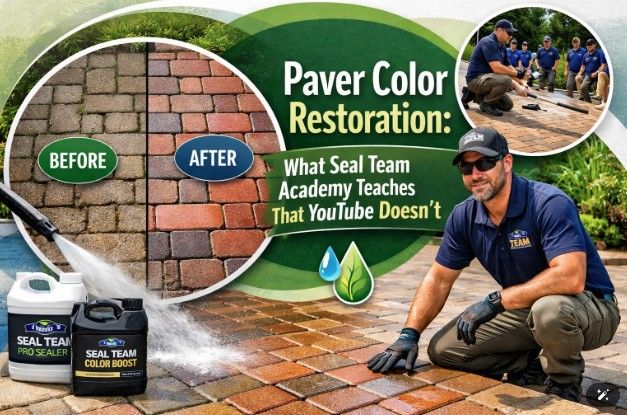
Paver Color Restoration: What Seal Team Academy Teaches That YouTube Doesn’t
YouTube is great for learning how to fix a leaky faucet or make sourdough bread. But when it comes to professional paver color restoration? That's where the free tutorial approach starts to crack, literally.
If you're a professional contractor looking to add paver restoration to your service menu, you've probably noticed the gap between what YouTube shows and what actually happens on a job site. Those 10-minute videos make it look easy. Mix some color. Spray it on. Done. Right?
Not quite.
The reality is that paver color restoration is as much art as it is science, and there's a reason why professionals invest in training programs like Seal Team Academy instead of piecing together knowledge from random videos. Let's break down what you're actually missing when you rely solely on YouTube.
The YouTube Gap: What Free Videos Can't Teach You
YouTube tutorials typically show you the "what": what product to spray, what equipment to use, what the finished result should look like. But they rarely dive into the "why" or the "what if."
What happens when you're working with pavers that have been sealed before? What if the customer has travertine mixed with concrete pavers? What if it's February and the substrate temperature is hovering around 50 degrees? What if the pavers have been stained with rust, oil, or organic matter?
These are the real-world scenarios that turn a straightforward color restoration job into a problem-solving exercise. YouTube videos are great at showing ideal conditions. Professional training prepares you for the chaos of actual job sites.
What Seal Team Academy Actually Covers
Seal Team Academy's two-day intensive program goes far beyond the technical steps of mixing and applying color. You're learning a complete system that includes sales techniques, proper surface preparation, pressure washing protocols, stripping existing sealers, color restoration methods, sealing techniques, and even how to permanently color joint sand.
The business side matters just as much as the technical side. You can be the best color restoration tech in your market, but if you're undercharging by 40% because you don't understand how to price jobs properly, you're leaving serious money on the table.
Here's what sets the academy apart: you're learning from instructors who have run thousands of jobs. They've made the mistakes so you don't have to. They know which shortcuts actually save time and which ones will have you back at the job site fixing problems for free.
The hands-on component is critical. You're not just watching someone spray pavers on a screen. You're holding the equipment, adjusting spray patterns, seeing how different substrates react to different products, and understanding the tactile feedback that tells you when you're doing it right.
The Professional Difference in Color Restoration
Professional paver color restoration starts long before you ever touch a spray wand. It begins with proper surface preparation: the step that most DIY videos gloss over or skip entirely.
Your substrate needs to be genuinely clean. Not "looks clean" but actually free of contaminants, oils, organic growth, and residues. This is where products like Green Ox Renew come into play. It's an EPA Safer Choice certified hydrogen peroxide-based cleaner that prepares surfaces without the harsh chemical residues that can interfere with sealer adhesion.
The difference between a YouTube approach and professional training shows up in the prep work. Seal Team Academy teaches you how to diagnose surface contamination, select the right cleaning method for each substrate type, and verify that your surface is truly ready for color and sealer. Skip this step or do it wrong, and everything that follows will underperform.
Color application itself is more nuanced than it appears. You're not just spraying a uniform coat. You're reading the substrate, adjusting your technique based on porosity variations, understanding how different temperatures affect drying times, and knowing when to apply multiple coats versus when a single pass is sufficient.
Products That Match the Training
Professional training deserves professional-grade products. When you attend Seal Team Academy, you're learning to work with the same product line that successful contractors rely on daily.
After your surface prep with Green Ox Renew, you're moving into color enhancement and sealing. This is where products like Orca Gloss or Stonefish enter the picture. Orca Gloss delivers that deep, rich "wet look" that customers love, enhancing natural stone colors and creating a glossy finish that makes pavers look brand new. Stonefish offers an invisible protection that preserves the natural appearance while providing the same level of protection.
The key is matching the right product to the customer's expectations and the substrate's requirements. A commercial property might need a different finish than a residential pool deck. Training teaches you how to make those decisions confidently rather than guessing based on incomplete information.
Why Substrate Knowledge Separates Pros from DIYers
Here's something YouTube rarely addresses in depth: not all pavers are created equal. Concrete pavers, clay pavers, natural stone, travertine, and manufactured stone all have different porosity levels, absorption rates, and chemical sensitivities.
Apply the wrong product or technique to the wrong substrate, and you could end up with hazing, uneven color, premature failure, or worse: a callback that eats your profit margin.
Seal Team Academy dedicates significant time to substrate identification and product selection. You're learning how to test porosity, how to identify previously sealed surfaces, and how to adjust your approach based on what you're actually working with instead of what you assumed you'd be working with.
This knowledge prevents expensive mistakes. It's the difference between confidently bidding a job knowing you can deliver excellent results versus hoping everything works out the way it did in that YouTube video.
The Business Case for Professional Training
Let's talk numbers for a moment. A two-day training program is an investment. But consider what you're gaining:
You're compressing years of trial-and-error learning into two intensive days. You're avoiding the costly mistakes that come from figuring things out on your own. You're learning pricing strategies that ensure profitability. You're getting access to a network of professionals who can answer questions when you run into unique situations.
Most importantly, you're building confidence. When you can walk onto a job site and immediately diagnose issues, recommend solutions, and execute flawlessly, you're positioning yourself as an expert rather than just another guy with a pressure washer and a YouTube education.
Customers can tell the difference. They might not understand the technical details, but they recognize competence and professionalism when they see it. That translates into higher close rates, better reviews, and more referrals.
Beyond the Basics: Advanced Techniques That Matter
Color restoration isn't always straightforward. Sometimes you're working with badly faded pavers that need multiple color applications. Sometimes you're dealing with efflorescence issues that need to be resolved before you can even think about color. Sometimes you're restoring pavers that are 20 years old and require special approaches.
These advanced scenarios are where professional training really pays off. You're learning how to stack colors for depth, how to address substrate issues that would compromise any restoration attempt, and how to manage customer expectations when a project becomes more complex than initially anticipated.
The academy also covers something that YouTube videos never address: what to do when things go wrong. Because they will. Not every time, but often enough that you need a plan. How do you handle a sealer that didn't cure properly? What's your protocol when unexpected rain hits before your sealer has fully cured? How do you address customer complaints about color variations?
Professional training gives you the troubleshooting framework that transforms problems into solvable challenges rather than career-ending disasters.
Making the Investment in Your Professional Development
YouTube has its place in your learning ecosystem. It's great for refreshing your memory on specific techniques or seeing how other professionals approach certain situations. But it's not a substitute for comprehensive, hands-on professional training.
If you're serious about adding paver color restoration to your service offerings: or improving the quality of the restoration work you're already doing: investing in professional training pays dividends that compound over time. Better results lead to happier customers. Happier customers lead to more referrals. More referrals lead to business growth.
The contractors who invest in programs like Seal Team Academy aren't just learning how to restore pavers. They're building sustainable, profitable businesses built on expertise rather than guesswork.
Your competition is watching YouTube videos and hoping for the best. You can be the professional who actually knows what they're doing: and your work will reflect that difference every single time.
Ready to take your paver restoration skills to the next level? Explore our professional-grade products designed to deliver the results your training deserves.
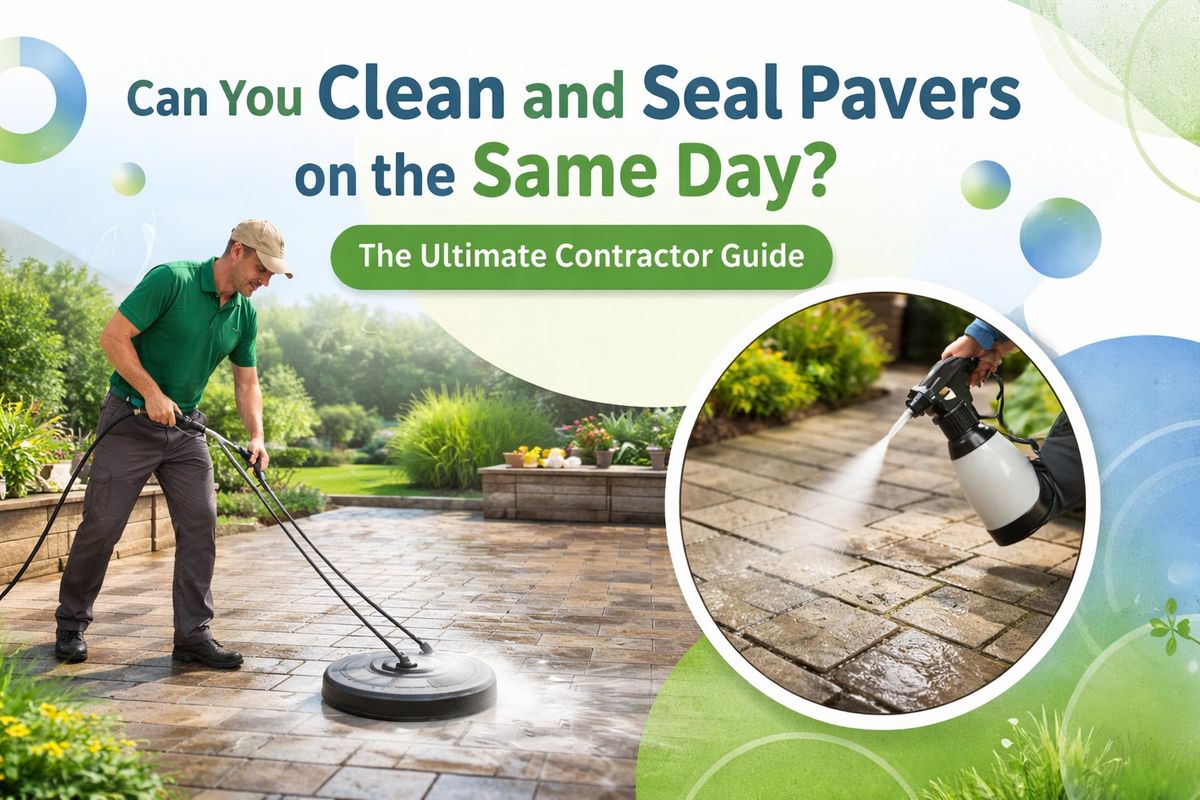
How to Seal Pavers the Same Day You Clean Them (Without Ruining the Job)
Sealing pavers is a smart investment: it protects against stains, fading, and water damage, maintaining your hardscape’s appeal for years. But what if you want to clean and seal on the same day, without sacrificing durability or appearance? With the right approach and products, you can deliver professional results quickly: every time.
Why Efficiency Matters (But So Does Doing It Right)
Whether you’re a pressure washing pro, a sealing contractor, or a discerning homeowner, speed matters. Completing cleaning and sealing in a single day maximizes efficiency, minimizes disruption, and lets you move on to the next project. But shortcutting the process, especially with improper drying and prep, leads to trapped moisture, hazy finishes, and premature sealer failure.
Your challenge: minimize downtime while ensuring the sealer bonds deeply and performs long-term. Let’s break down how to get it right.
Meet the Key Player: Green Ox Renew
To safely prep pavers for same-day sealing, you need a highly effective cleaner that rinses away easily and leaves no harmful residues. Green Ox Renew stands out as a hydrogen peroxide–based solution carrying the EPA Safer Choice distinction. It oxidizes grime, algae, organic matter, and old stains, then breaks down into oxygen and water: leaving the paver surface clean, residue-free, and ready to dry fast.
Why use Green Ox Renew?
- Meets strict human and environmental health criteria (EPA Safer Choice)
- Non-toxic, biodegradable, and plant-safe
- No sticky surfactant residues that slow drying
- Powerful cleaning action for optimal sealer penetration
The 4-Step Process: Clean and Seal in One Day
Follow these steps carefully for same-day success on driveways, patios, walkways, and pool decks.
1. Preparation & Pre-Cleaning
Remove loose debris, leaves, and surface dirt. This top layer should be swept, blown, or washed away before applying any liquid cleaners. This step also allows you to spot any areas needing extra attention.
2. Deep Cleaning with Green Ox Renew
- Apply Green Ox Renew according to label instructions.
- Agitate with a brush or surface cleaner for stubborn stains.
- Allow the product to work for 5–10 minutes before rinsing thoroughly with water.
Tip: For heavy organic soiling, apply a second treatment. Always rinse thoroughly: residual cleaner can inhibit drying.
Image: Satisfied customer highlighting Green Ox Renew’s eco-friendly cleaning results on a dock:
3. Fast Dry-Down: Timing is Everything
Set yourself up for success by starting early in the day and choosing dry, breezy weather. Most paver surfaces will be ready to seal within 1 to 3 hours after the final rinse if:
- Water beads or dampness are completely gone from the surface
- Joints are visibly dry (check between pavers for moisture)
- Surface is dry to the touch: test several spots for assurance
For best results, allow at least 30 to 45 minutes after cleaning before checking; then, wait until conditions are ideal. Rely on your touch and visual cues more than the clock: humidity, shade, and temperature all affect drying speed.
4. Sealing: Achieve a Lasting, Even Finish
Once the pavers are dry, apply your selected Superior Quality Coatings sealer in thin, even coats per product instructions. Use a high-quality sprayer or roller, maintaining a wet edge for consistent coverage.
Key tips:
- Don’t flood the joints: apply enough sealer to soak in, but not so much that it pools.
- Work in manageable sections to maintain control.
- If needed, apply a second coat once the first dries (usually after 2-4 hours).
> Learn more about SQC’s range of paver sealers: Superior Quality Coatings Sealers
Aftercare: When Can You Use Your Freshly Sealed Pavers?
Timing is crucial both before and after sealing. Here’s your quick-reference guide for foot, vehicle, and furniture use post-application:
Respect these intervals for maximum protection and to prevent scuffs, stains, or impressions in the fresh sealer.
Common Pitfalls (and How to Avoid Them)
Don’t rush the drying. Even quick-dry methods can backfire if there’s hidden moisture in joints.
Don’t use high-residue cleaners. Alkaline or surfactant-heavy products leave films that block sealer penetration and prolong dry times.
Don’t seal over damp pavers. This leads to cloudiness, hazing, and compromised adhesion: undoing all your hard work. Always use the touch test in multiple spots.
Pro Tips for Faster, Safer Results
- Choose mornings. Early starts make the most of sunlight and breeze for rapid drying.
- Use air movers or leaf blowers to accelerate surface drying after cleaning, especially in shaded or low-wind areas.
- Monitor weather closely. Avoid sealing if rain is expected within 12 hours.
- Educate your clients. Set realistic expectations for aftercare to ensure long-term satisfaction.
Image: Screenshot of a customer confirming the environmental benefits and low runoff risk of Green Ox Renew used in paver prep.
Why Proper Process Means Better, Longer-Lasting Results
When you take time to clean thoroughly, allow for adequate dry-down, and select top-tier products engineered for safety and performance, the results are clear: greater surface protection, improved color retention, and satisfied, repeat customers.
Superior Quality Coatings supports professionals and DIYers alike with industry-leading products, educational resources, and hands-on training. If you want to take your skills to the next level, consider enrolling in the Seal Team Academy:
Your Next Steps
- Source EPA Safer Choice–certified cleaners like Green Ox Renew for the most efficient prep.
- Use only SQC sealers for reliable, easy-to-apply paver protection.
- Follow the proven process above for every job: no shortcuts.
- For advanced tips and professional certification, explore Seal Team Academy.
Questions about your next project? Reach out to our experts or explore more guides on the Superior Quality Coatings Blog.
Achieve commercial-quality paver sealing: faster, safer, and with a finish that stands up to anything.
Commercial kitchen exhaust systems accumulate grease faster than most people realize. For decades, hood cleaning professionals relied on harsh caustic chemicals to cut through that buildup. In 2026, the industry is experiencing a fundamental shift. Restaurant owners and cleaning contractors now recognize that you don't need to sacrifice safety or environmental responsibility to achieve spotless, grease-free kitchen hoods. If you're new to hood cleaning or looking to upgrade your chemical arsenal, understanding eco-friendly degreasing options will transform how you approach commercial kitchen maintenance. The Hidden Risks of Traditional Caustic Chemicals Traditional hood cleaning chemicals typically contain sodium hydroxide (caustic soda) or potassium hydroxide at extremely high pH levels: often exceeding 13 on the pH scale. These formulations cut grease effectively, but they come with significant downsides that affect both workers and clients. Physical Hazards for Cleaning Personnel Caustic chemicals cause immediate chemical burns upon skin contact. Even brief exposure can result in painful injuries that require medical attention. The fumes from these products irritate respiratory systems, particularly in enclosed spaces like commercial kitchens. Many cleaning professionals report chronic respiratory issues after years of exposure to traditional hood cleaning chemicals. Workers must wear extensive personal protective equipment: thick rubber gloves, full face shields, protective aprons, and respirators. This gear is hot, uncomfortable, and cumbersome, especially during multi-hour cleaning sessions. Despite these precautions, accidents happen. Splashes reach exposed skin, fumes seep through imperfect seals, and emergency eye wash stations become necessary fixtures. Environmental and Disposal Concerns High-pH caustic solutions require careful neutralization before disposal. You cannot simply rinse these chemicals down the drain without violating environmental regulations in most jurisdictions. The wastewater created during hood cleaning with traditional chemicals often contains hazardous materials that municipal treatment facilities struggle to process safely. Improper disposal damages local water systems and ecosystems. Even when disposal follows proper protocols, the environmental footprint remains substantial. Transportation of hazardous materials, specialized disposal facilities, and neutralization processes all contribute to unnecessary environmental burden. Surface Damage and Maintenance Issues Caustic chemicals don't discriminate: they attack grease, but they also corrode metals, degrade seals, and damage painted surfaces. Repeated exposure to traditional hood cleaning chemicals shortens the lifespan of expensive exhaust system components. Restaurant owners face premature replacement costs for hoods, ductwork, and fans. The 2026 Shift Toward Eco-Friendly Degreasing The commercial cleaning industry is undergoing a transformation driven by three converging factors: stricter environmental regulations, increased worker safety awareness, and client demand for sustainable practices. Modern restaurant operators understand that their brand reputation extends beyond the dining room. Customers ask about sustainability practices, and many establishments proudly market their eco-conscious operations. Hood cleaning might happen after hours, but the chemicals used in that process directly impact a restaurant's environmental footprint and food safety standards. Regulatory bodies continue tightening restrictions on caustic chemical usage and disposal. Forward-thinking hood cleaning professionals recognize that adapting now positions them ahead of inevitable future regulations. The contractors who make this transition first gain competitive advantages in securing contracts with environmentally conscious clients. Worker retention also drives this shift. Cleaning professionals seek employers who prioritize their health and safety. Companies that continue using harsh caustic chemicals face higher turnover rates and struggle to attract quality personnel. The labor market rewards businesses that invest in safer working conditions. How Modern Eco-Friendly Degreasers Work The latest generation of eco-friendly hood cleaning chemicals proves that you don't need caustic ingredients to dissolve grease. Products like Kitchen Ox Pro use hydrogen peroxide combined with specialized surfactants to achieve superior degreasing performance without the hazards of traditional formulations. The Science Behind Hydrogen Peroxide Degreasing Hydrogen peroxide naturally breaks down organic compounds through oxidation. When formulated correctly with professional-grade surfactants, hydrogen peroxide molecules penetrate grease deposits and break the molecular bonds that hold them together. This process literally lifts grease away from surfaces rather than burning through it with caustic action. The reaction produces only water and oxygen as byproducts. No toxic residues remain on surfaces. No hazardous waste requires special disposal. The environmental impact approaches zero. Kitchen Ox Pro delivers 100% environmental friendliness while maintaining the aggressive grease-cutting power demanded by commercial hood cleaning applications. The formulation works on contact, requiring minimal dwell time even on heavily soiled surfaces. You achieve the same cleaning results as caustic products without the associated risks. Application and Performance Eco-friendly degreasers like Kitchen Ox Pro apply using standard spray equipment: no special tools required. The product clings to vertical surfaces, allowing adequate contact time without excessive runoff. This characteristic proves especially valuable when cleaning the interior angles and hard-to-reach areas of exhaust systems. The cleaning action begins immediately upon application. You'll observe grease emulsifying and releasing from metal surfaces within minutes. For heavily carbonized deposits, a second application typically completes the job. The process requires no harsh scrubbing that damages protective coatings on hood surfaces. Benefits for Hood Cleaning Professionals Switching to eco-friendly hood cleaning chemicals transforms your daily work environment and business operations in measurable ways. Improved Workplace Safety You reduce injury risk dramatically when you eliminate caustic chemicals from your workflow. Minor splashes and accidental contact no longer result in chemical burns. Respiratory irritation becomes a non-issue. Your team works more comfortably and confidently. The personal protective equipment requirements drop substantially. Basic nitrile gloves and safety glasses provide adequate protection when working with hydrogen peroxide-based formulations. You eliminate the need for face shields, heavy rubber aprons, and respirators. This reduction in PPE requirements lowers equipment costs and improves worker mobility during cleaning operations. Simplified Disposal and Compliance Eco-friendly degreaser wastewater can be disposed of through standard drains in most jurisdictions. You eliminate the need for on-site neutralization, hazardous waste collection containers, and specialized disposal services. This simplification reduces operational costs and removes compliance headaches from your business model. Documentation requirements decrease when you're not handling hazardous materials. You spend less time on paperwork and more time on productive cleaning work. Insurance premiums often decrease when you remove caustic chemicals from your operations, providing additional financial benefits. Competitive Advantages Restaurant clients actively seek contractors who use environmentally responsible methods. When you market your services as eco-friendly, you differentiate yourself from competitors still using traditional caustic chemicals. This positioning allows you to command premium pricing while attracting quality clients who value sustainable practices. Your ability to work in occupied buildings improves. Eco-friendly degreasers produce no noxious fumes, allowing you to clean during operating hours if necessary. This flexibility provides scheduling advantages that clients appreciate. Benefits for Restaurant Owners and Managers Choosing a hood cleaning contractor who uses eco-friendly products protects your business interests in several critical ways. Food Safety Assurance Hydrogen peroxide-based degreasers leave no chemical residues on kitchen surfaces. Traditional caustic chemicals can leave alkaline films that contaminate food preparation areas if not thoroughly rinsed. When your hood cleaning contractor uses Kitchen Ox Pro or similar eco-friendly products, you eliminate this contamination risk entirely. The cleaning process creates no airborne chemical particles that could settle on kitchen equipment, stored ingredients, or prepared food. Your kitchen returns to full food production status immediately after cleaning, with zero concerns about chemical exposure. Equipment Longevity Eco-friendly degreasers clean without corroding metal surfaces or degrading seals and gaskets. Your exhaust system components last longer, reducing capital expenses for premature replacements. The gentle yet effective cleaning action preserves protective coatings and finishes on stainless steel surfaces. Brand Alignment with Sustainability Values If your restaurant markets itself as environmentally conscious, every operational choice matters. Using an eco-friendly degreaser for hood cleaning aligns with your brand promise. You can truthfully tell customers that even your behind-the-scenes cleaning operations reflect your commitment to environmental responsibility. This consistency strengthens customer trust and provides authentic content for social media and marketing communications. Modern diners care about these details, and demonstrating comprehensive environmental commitment differentiates your establishment from competitors. Making the Switch to Eco-Friendly Hood Cleaning Transitioning from traditional caustic chemicals to eco-friendly alternatives requires minimal adjustment. The application techniques remain largely identical, and the learning curve is negligible for experienced hood cleaning professionals. Start by testing eco-friendly degreaser on a small section of hood surface to familiarize yourself with the product's characteristics. You'll quickly recognize that the cleaning performance meets or exceeds traditional chemicals without the associated hazards. Adjust your dwell times based on the level of grease buildup. Light to moderate soiling typically requires 5-10 minutes of contact time. Heavily carbonized deposits may benefit from 15-20 minutes before agitation and rinsing. These timeframes compare favorably to traditional chemicals once you account for the safety precautions required with caustic products. Train your team on the benefits of eco-friendly formulations to ensure buy-in and proper application techniques. Emphasize the improved safety profile and simplified disposal procedures. Most cleaning professionals welcome the transition once they experience the difference firsthand. Conclusion The hood cleaning industry's shift toward eco-friendly degreasing represents progress for everyone involved: cleaning professionals work in safer conditions, restaurant owners protect their equipment and brand reputation, and the environment benefits from reduced chemical pollution. Kitchen Ox Pro and similar hydrogen peroxide-based formulations prove that aggressive grease-cutting performance doesn't require harsh caustic ingredients. You achieve spotless commercial kitchen hoods while protecting worker health and environmental quality. Whether you're a hood cleaning contractor evaluating your chemical options or a restaurant manager selecting a cleaning service provider, eco-friendly degreasing delivers superior value through enhanced safety, simplified operations, and alignment with modern sustainability expectations. The question isn't whether to make this transition: it's how quickly you can implement it. Ready to explore eco-friendly cleaning solutions for your commercial operations? Contact Superior Quality Coatings to discuss how our professional-grade products can transform your cleaning results while protecting people and the environment.
Commercial kitchen exhaust systems accumulate grease faster than most people realize. For decades, hood cleaning professionals relied on harsh caustic chemicals to cut through that buildup. In 2026, the industry is experiencing a fundamental shift. Restaurant owners and cleaning contractors now recognize that you don't need to sacrifice safety or environmental responsibility to achieve spotless, grease-free kitchen hoods.
If you're new to hood cleaning or looking to upgrade your chemical arsenal, understanding eco-friendly degreasing options will transform how you approach commercial kitchen maintenance.
The Hidden Risks of Traditional Caustic Chemicals
Traditional hood cleaning chemicals typically contain sodium hydroxide (caustic soda) or potassium hydroxide at extremely high pH levels: often exceeding 13 on the pH scale. These formulations cut grease effectively, but they come with significant downsides that affect both workers and clients.
Physical Hazards for Cleaning Personnel
Caustic chemicals cause immediate chemical burns upon skin contact. Even brief exposure can result in painful injuries that require medical attention. The fumes from these products irritate respiratory systems, particularly in enclosed spaces like commercial kitchens. Many cleaning professionals report chronic respiratory issues after years of exposure to traditional hood cleaning chemicals.
Workers must wear extensive personal protective equipment: thick rubber gloves, full face shields, protective aprons, and respirators. This gear is hot, uncomfortable, and cumbersome, especially during multi-hour cleaning sessions. Despite these precautions, accidents happen. Splashes reach exposed skin, fumes seep through imperfect seals, and emergency eye wash stations become necessary fixtures.
Environmental and Disposal Concerns
High-pH caustic solutions require careful neutralization before disposal. You cannot simply rinse these chemicals down the drain without violating environmental regulations in most jurisdictions. The wastewater created during hood cleaning with traditional chemicals often contains hazardous materials that municipal treatment facilities struggle to process safely.
Improper disposal damages local water systems and ecosystems. Even when disposal follows proper protocols, the environmental footprint remains substantial. Transportation of hazardous materials, specialized disposal facilities, and neutralization processes all contribute to unnecessary environmental burden.
Surface Damage and Maintenance Issues
Caustic chemicals don't discriminate: they attack grease, but they also corrode metals, degrade seals, and damage painted surfaces. Repeated exposure to traditional hood cleaning chemicals shortens the lifespan of expensive exhaust system components. Restaurant owners face premature replacement costs for hoods, ductwork, and fans.
The 2026 Shift Toward Eco-Friendly Degreasing
The commercial cleaning industry is undergoing a transformation driven by three converging factors: stricter environmental regulations, increased worker safety awareness, and client demand for sustainable practices.
Modern restaurant operators understand that their brand reputation extends beyond the dining room. Customers ask about sustainability practices, and many establishments proudly market their eco-conscious operations. Hood cleaning might happen after hours, but the chemicals used in that process directly impact a restaurant's environmental footprint and food safety standards.
Regulatory bodies continue tightening restrictions on caustic chemical usage and disposal. Forward-thinking hood cleaning professionals recognize that adapting now positions them ahead of inevitable future regulations. The contractors who make this transition first gain competitive advantages in securing contracts with environmentally conscious clients.
Worker retention also drives this shift. Cleaning professionals seek employers who prioritize their health and safety. Companies that continue using harsh caustic chemicals face higher turnover rates and struggle to attract quality personnel. The labor market rewards businesses that invest in safer working conditions.
How Modern Eco-Friendly Degreasers Work
The latest generation of eco-friendly hood cleaning chemicals proves that you don't need caustic ingredients to dissolve grease. Products like Kitchen Ox Pro use hydrogen peroxide combined with specialized surfactants to achieve superior degreasing performance without the hazards of traditional formulations.
The Science Behind Hydrogen Peroxide Degreasing
Hydrogen peroxide naturally breaks down organic compounds through oxidation. When formulated correctly with professional-grade surfactants, hydrogen peroxide molecules penetrate grease deposits and break the molecular bonds that hold them together. This process literally lifts grease away from surfaces rather than burning through it with caustic action.
The reaction produces only water and oxygen as byproducts. No toxic residues remain on surfaces. No hazardous waste requires special disposal. The environmental impact approaches zero.
Kitchen Ox Pro delivers 100% environmental friendliness while maintaining the aggressive grease-cutting power demanded by commercial hood cleaning applications. The formulation works on contact, requiring minimal dwell time even on heavily soiled surfaces. You achieve the same cleaning results as caustic products without the associated risks.
Application and Performance
Eco-friendly degreasers like Kitchen Ox Pro apply using standard spray equipment: no special tools required. The product clings to vertical surfaces, allowing adequate contact time without excessive runoff. This characteristic proves especially valuable when cleaning the interior angles and hard-to-reach areas of exhaust systems.
The cleaning action begins immediately upon application. You'll observe grease emulsifying and releasing from metal surfaces within minutes. For heavily carbonized deposits, a second application typically completes the job. The process requires no harsh scrubbing that damages protective coatings on hood surfaces.
Benefits for Hood Cleaning Professionals
Switching to eco-friendly hood cleaning chemicals transforms your daily work environment and business operations in measurable ways.
Improved Workplace Safety
You reduce injury risk dramatically when you eliminate caustic chemicals from your workflow. Minor splashes and accidental contact no longer result in chemical burns. Respiratory irritation becomes a non-issue. Your team works more comfortably and confidently.
The personal protective equipment requirements drop substantially. Basic nitrile gloves and safety glasses provide adequate protection when working with hydrogen peroxide-based formulations. You eliminate the need for face shields, heavy rubber aprons, and respirators. This reduction in PPE requirements lowers equipment costs and improves worker mobility during cleaning operations.
Simplified Disposal and Compliance
Eco-friendly degreaser wastewater can be disposed of through standard drains in most jurisdictions. You eliminate the need for on-site neutralization, hazardous waste collection containers, and specialized disposal services. This simplification reduces operational costs and removes compliance headaches from your business model.
Documentation requirements decrease when you're not handling hazardous materials. You spend less time on paperwork and more time on productive cleaning work. Insurance premiums often decrease when you remove caustic chemicals from your operations, providing additional financial benefits.
Competitive Advantages
Restaurant clients actively seek contractors who use environmentally responsible methods. When you market your services as eco-friendly, you differentiate yourself from competitors still using traditional caustic chemicals. This positioning allows you to command premium pricing while attracting quality clients who value sustainable practices.
Your ability to work in occupied buildings improves. Eco-friendly degreasers produce no noxious fumes, allowing you to clean during operating hours if necessary. This flexibility provides scheduling advantages that clients appreciate.
Benefits for Restaurant Owners and Managers
Choosing a hood cleaning contractor who uses eco-friendly products protects your business interests in several critical ways.
Food Safety Assurance
Hydrogen peroxide-based degreasers leave no chemical residues on kitchen surfaces. Traditional caustic chemicals can leave alkaline films that contaminate food preparation areas if not thoroughly rinsed. When your hood cleaning contractor uses Kitchen Ox Pro or similar eco-friendly products, you eliminate this contamination risk entirely.
The cleaning process creates no airborne chemical particles that could settle on kitchen equipment, stored ingredients, or prepared food. Your kitchen returns to full food production status immediately after cleaning, with zero concerns about chemical exposure.
Equipment Longevity
Eco-friendly degreasers clean without corroding metal surfaces or degrading seals and gaskets. Your exhaust system components last longer, reducing capital expenses for premature replacements. The gentle yet effective cleaning action preserves protective coatings and finishes on stainless steel surfaces.
Brand Alignment with Sustainability Values
If your restaurant markets itself as environmentally conscious, every operational choice matters. Using an eco-friendly degreaser for hood cleaning aligns with your brand promise. You can truthfully tell customers that even your behind-the-scenes cleaning operations reflect your commitment to environmental responsibility.
This consistency strengthens customer trust and provides authentic content for social media and marketing communications. Modern diners care about these details, and demonstrating comprehensive environmental commitment differentiates your establishment from competitors.
Making the Switch to Eco-Friendly Hood Cleaning
Transitioning from traditional caustic chemicals to eco-friendly alternatives requires minimal adjustment. The application techniques remain largely identical, and the learning curve is negligible for experienced hood cleaning professionals.
Start by testing eco-friendly degreaser on a small section of hood surface to familiarize yourself with the product's characteristics. You'll quickly recognize that the cleaning performance meets or exceeds traditional chemicals without the associated hazards.
Adjust your dwell times based on the level of grease buildup. Light to moderate soiling typically requires 5-10 minutes of contact time. Heavily carbonized deposits may benefit from 15-20 minutes before agitation and rinsing. These timeframes compare favorably to traditional chemicals once you account for the safety precautions required with caustic products.
Train your team on the benefits of eco-friendly formulations to ensure buy-in and proper application techniques. Emphasize the improved safety profile and simplified disposal procedures. Most cleaning professionals welcome the transition once they experience the difference firsthand.
Conclusion
The hood cleaning industry's shift toward eco-friendly degreasing represents progress for everyone involved: cleaning professionals work in safer conditions, restaurant owners protect their equipment and brand reputation, and the environment benefits from reduced chemical pollution.
Kitchen Ox Pro and similar hydrogen peroxide-based formulations prove that aggressive grease-cutting performance doesn't require harsh caustic ingredients. You achieve spotless commercial kitchen hoods while protecting worker health and environmental quality.
Whether you're a hood cleaning contractor evaluating your chemical options or a restaurant manager selecting a cleaning service provider, eco-friendly degreasing delivers superior value through enhanced safety, simplified operations, and alignment with modern sustainability expectations. The question isn't whether to make this transition: it's how quickly you can implement it.
Ready to explore eco-friendly cleaning solutions for your commercial operations? Contact Superior Quality Coatings to discuss how our professional-grade products can transform your cleaning results while protecting people and the environment.
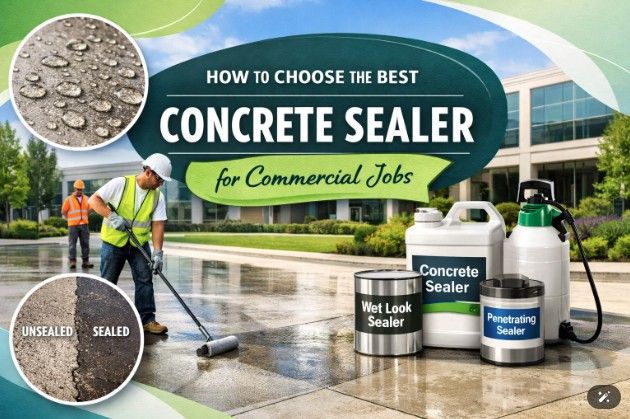
How to Choose the Best Concrete Sealer for Commercial Jobs
Commercial concrete sealing is a different beast than residential work. The stakes are higher, the traffic is heavier, and the expectations from property managers and business owners are through the roof. Choosing the wrong sealer can mean premature failure, unhappy clients, and costly callbacks.
The good news? When you understand what separates commercial-grade performance from residential-level products, selecting the right concrete sealer becomes straightforward. This guide walks you through everything you need to know to make the right call on your next commercial job.
Why Commercial Jobs Are Different
Before diving into product selection, you need to understand why commercial concrete sealing demands a different approach than the driveways and patios you might seal on weekends.
High Traffic Loads
Commercial spaces see foot traffic that residential properties simply don't experience. Think retail stores with hundreds of customers daily, warehouse floors with forklifts and pallet jacks, or restaurant patios that get scrubbed down every night. Your sealer needs to withstand mechanical scrubbing, pressure washing, and repeated friction without breaking down.
Chemical Exposure
Commercial environments expose concrete to a wider variety of chemicals. Oil and grease in parking garages. Cleaning solutions in food service areas. De-icing salts at building entrances. The sealer you choose must resist these contaminants without losing its protective properties.
Safety Requirements
Slip resistance isn't optional in commercial settings: it's a liability issue. Property managers and business owners need sealers that maintain adequate traction, especially in areas prone to moisture. Your product choice directly impacts their risk exposure.
Downtime Constraints
Here's the reality of commercial work: businesses lose money when they're closed. A sealer that requires 48-72 hours of cure time before foot traffic can resume is a hard sell. Commercial clients need solutions that minimize operational disruption.
The Water-Based Advantage
If you're still using solvent-based sealers on commercial jobs, it's time to reconsider. Water-based sealers have evolved significantly, and for commercial applications, they now offer clear advantages.
Breathability That Prevents Failure
One of the biggest reasons sealers fail on commercial concrete is trapped moisture. Solvent-based products often create an impermeable film that locks moisture beneath the surface. When that moisture tries to escape: and it will: you get bubbling, peeling, and whitening.
Water-based sealers like Orca Gloss and Ghost Fish are breathable. They allow moisture vapor to escape while still providing excellent surface protection. This is especially critical for commercial slabs that may not have adequate moisture barriers or have been poured over high water tables.
Low VOC Compliance
Commercial projects often require compliance with local and federal VOC (volatile organic compound) regulations. Many solvent-based sealers exceed allowable limits, which can create problems during inspections or when bidding on government contracts.
Water-based formulations typically fall well within VOC limits, making compliance a non-issue. This matters more than you might think: losing a commercial contract over a technicality in your product spec is an expensive lesson.
No Trapped Moisture Issues
Traditional sealers require bone-dry concrete for application. In commercial settings, waiting 3-5 days for a slab to dry out completely isn't always realistic. Water-based sealers from Superior Quality Coatings can be applied to damp surfaces, dramatically expanding your application windows.
Finish Options: Matching the Look to the Space
Commercial clients care about aesthetics. The finish you recommend needs to match the environment and the client's vision for the space.
High-Gloss Finishes
For retail spaces, showrooms, and upscale commercial properties, a high-gloss finish like Orca Gloss delivers that wet-look shine that makes concrete pop. It enhances color, adds depth, and creates a polished appearance that impresses customers and visitors.
Gloss finishes work particularly well on:
- Retail storefronts
- Hotel lobbies and common areas
- Restaurant patios
- Automotive showrooms
Natural Look Finishes
Not every commercial space calls for shine. Warehouses, industrial facilities, and some office buildings benefit from a more subtle approach. Products like Mahi and Stonefish provide excellent protection while maintaining the concrete's natural appearance.
Natural look sealers are ideal for:
- Warehouse floors
- Industrial facilities
- Office building common areas
- Medical and healthcare facilities
- Educational institutions
The key is asking your client the right questions upfront. What's the desired aesthetic? How will the space be used? What impression do they want visitors to have? Match the finish to those answers.
Safety and Compliance: Protecting Your Client (and Yourself)
Commercial sealing projects come with regulatory considerations that residential work doesn't. Understanding these requirements protects both your client and your business.
EPA Safer Choice Certification
EPA Safer Choice recognition matters when you are working for environmentally conscious property managers, healthcare facilities, schools, and other organizations that require verified safer chemistry. This distinction applies to specific products that have been evaluated for human health and environmental safety.
At Superior Quality Coatings, only GreenOx Renew (a hydrogen peroxide-based cleaner) carries the EPA Safer Choice distinction. It is not a designation that applies to our sealers.
Use GreenOx Renew as your essential prep step before sealing. Apply it on any floor you plan to seal to remove embedded soils and organic contamination so the surface is clean, receptive, and ready for coating. After cleaning, follow proper rinsing and drying guidelines for your substrate and project conditions.
Our sealers remain eco-friendly and low-VOC, which supports indoor air quality and compliance needs, but they are not represented as EPA Safer Choice certified.
VOC Regulations
Different regions have different VOC limits. California's South Coast Air Quality Management District (SCAQMD) has some of the strictest standards in the country, but regulations are tightening everywhere.
Specifying low-VOC water-based sealers eliminates compliance headaches. You won't have to worry about regional variations or upcoming regulation changes because you're already well under the limits.
Documentation for Commercial Contracts
Commercial clients often require product specification sheets, safety data sheets (SDS), and compliance documentation. Having these ready: and having products that actually meet the requirements: streamlines the bidding process and builds trust with property managers.
Ease of Application: Why Pros Love Water-Based Sealers
Your time is money. Products that are difficult to apply, require perfect conditions, or demand extensive prep work eat into your margins. Here's why professional applicators are increasingly choosing water-based options for commercial work.
Damp Application Capability
Traditional sealers require waiting days for concrete to dry completely. With commercial schedules, that's often not possible. Water-based sealers can be applied to damp surfaces, meaning you can work sooner after cleaning and get the job done faster.
Faster Return to Service
Commercial clients need their spaces back in operation quickly. Water-based sealers typically allow light foot traffic within hours, not days. This alone can be a deciding factor when property managers are comparing bids.
Easier Cleanup
Water-based products clean up with water. No solvents, no special equipment, no disposal headaches. At the end of a long commercial job, that simplicity matters.
Recoat Flexibility
Commercial floors need maintenance. Water-based sealers recoat easily without extensive prep work. When your client calls you back in two years for a refresh, you'll appreciate not having to grind off the old sealer first.
Hydrogen Peroxide Cleaner vs. Bleach: Which Is Better For Your Pressure Washing Jobs?
If you've been in the pressure washing game for any amount of time, you've probably had this debate with yourself: or with another pro at the supply house. Bleach (sodium hypochlorite, or SH) has been the go-to for decades. It's cheap, it's powerful, and it gets the job done. But here's the thing: more and more professionals are making the switch to hydrogen peroxide cleaners, and there are some pretty compelling reasons why.
So what's the real deal? Is hydrogen peroxide just a "green" trend, or does it actually perform? Let's break it down and help you figure out which pressure washing chemicals make the most sense for your business in 2026.
The Effectiveness Debate: Does Hydrogen Peroxide Actually Work?
Let's address the elephant in the room first. You want something that cleans. Period. If it doesn't knock out organic growth, algae, mold, and grime, it doesn't matter how eco-friendly it is.
Here's the good news: hydrogen peroxide cleaners absolutely deliver when it comes to organic stains and growth. The science is pretty straightforward: hydrogen peroxide releases oxygen when it contacts organic matter, which breaks down mold, mildew, algae, and even stubborn stains at the molecular level.
Does bleach work faster in some scenarios? Sure, especially on heavily contaminated non-porous surfaces. But faster isn't always better. Bleach can leave behind residue, cause discoloration, and create callbacks when surfaces aren't rinsed properly. Hydrogen peroxide breaks down into water and oxygen, literally nothing harmful left behind.
For routine maintenance work, roof cleaning, and most residential jobs, a quality hydrogen peroxide cleaner will give you results that rival (and often surpass) traditional SH. The key is using a professional-grade formula, not the stuff you grab from the pharmacy aisle.
Safety: Protecting Plants, Pets, and Yourself
This is where the bleach vs hydrogen peroxide comparison gets really interesting: and where peroxide pulls ahead significantly.
Impact on Landscaping
Every pressure washer knows the drill with SH: pre-wet the plants, cover what you can, rinse like crazy, and still cross your fingers that Mrs. Johnson's prized hydrangeas survive the job. Bleach is brutal on vegetation. One missed spot, one gust of wind carrying overspray, and you're looking at dead plants and an unhappy customer.
Hydrogen peroxide? It's inherently safer for vegetation. When applied correctly, it won't scorch lawns or kill shrubs. You still want to be mindful of your application, but the margin for error is much wider. Jobs near gardens, pool decks surrounded by landscaping, and properties with extensive greenery become far less stressful.
Pet and Family Safety
Homeowners are asking more questions than ever about what chemicals you're using around their property. When you can tell a customer that your cleaning solution breaks down into water and oxygen: and is safe around their kids and pets: that's a powerful selling point. Try explaining the same thing about sodium hypochlorite. It's a harder conversation.
Your Own Health
Let's be honest: working with SH all day isn't great for you. The fumes, the skin irritation, the way it eats through your clothes and equipment. Hydrogen peroxide still requires proper handling (especially at higher concentrations like 35%), but it's generally less harsh on the applicator. Less protective equipment needed, fewer headaches at the end of a long day, and your trailer won't smell like a swimming pool.
Surface Considerations: Where Each Option Shines
Not every surface responds the same way to cleaning chemicals. This is where understanding your options really pays off.
Where Hydrogen Peroxide Excels
Hydrogen peroxide is the clear winner on porous and delicate surfaces:
- Wood decks and fences – Bleach can damage wood fibers, cause graying, and leave surfaces looking worse after cleaning. Peroxide cleans effectively without the harsh aftermath.
- Pavers and natural stone – Many pavers and stones are sensitive to chlorine-based cleaners. Peroxide offers effective cleaning without risking discoloration or surface damage.
- Roofing materials – SH can break down the tar in roof shingles over time with repeated applications. Hydrogen peroxide is gentler while still eliminating organic growth.
- Cedar and composite siding – These materials demand a softer touch. Peroxide delivers without the risk of bleaching or material degradation.
Where Bleach Still Has Its Place
To be fair, there are scenarios where SH makes sense:
- Heavily contaminated concrete with deep-set mold
- Commercial jobs where speed is the absolute priority
- Surfaces that can handle aggressive chemistry without damage
But here's the reality: those situations are becoming the exception, not the rule. Most residential and light commercial work falls squarely into "hydrogen peroxide territory."
Eco-Friendliness: More Than Just a Marketing Buzzword
You might think the eco-friendly angle is just about marketing to environmentally conscious customers. And sure, that's part of it. But there's a bigger picture here that directly affects your business.
Clean Water Act Compliance
Regulations around runoff and wastewater are getting stricter every year. Using chemicals that could contaminate storm drains, septic systems, or local waterways puts you at risk. Hydrogen peroxide-based cleaners that meet Clean Water Act requirements give you peace of mind that you're operating within the law.
Products like Green Ox Renew are specifically formulated to be non-toxic and safe for the environment: including plants, animals, and marine life. That's not just a nice-to-have; it's increasingly becoming a requirement for working in certain municipalities and HOA communities.
Customer Demand Is Real
Here's something you've probably noticed: customers are asking about your chemicals more often. They want bleach-free options. They're concerned about their gardens, their pets, and the environment. When you can offer a genuinely effective alternative that checks all those boxes, you differentiate yourself from competitors still relying solely on SH.
This isn't about being preachy or political: it's about meeting market demand and positioning your business for where the industry is headed.
The Superior Choice: Green Ox Renew and Perox 35
So if you're ready to add hydrogen peroxide cleaners to your arsenal (or make the full switch), which products should you consider?
At Superior Quality Coatings, we've developed two standout options for pressure washing professionals:
Green Ox Renew is our flagship hydrogen peroxide-based cleaner designed for versatility and effectiveness. It handles organic growth on everything from cedar shingle siding to docks to wood decks. Pros consistently report excellent results without the downsides of traditional SH. It meets Clean Water Act requirements and breaks down organic matter into harmless byproducts.
Perox 35 delivers professional-strength cleaning power at a 35% concentration. It's become a favorite for wood fence restoration and situations where you need serious cleaning muscle without resorting to bleach. The feedback from users has been overwhelmingly positive: words like "wonderful" and "highly effective" come up repeatedly.
Both products are formulated specifically for professional use: not watered-down consumer versions repackaged for contractors. You get real results backed by a company that understands what pressure washers actually need on the job.
Want to learn more about our full line of eco-friendly cleaning products? Check out our eco-friendly cleaning guide or explore our Clenzo Cleaners brand.
Making the Right Call for Your Business
The hydrogen peroxide cleaner vs. bleach debate doesn't have to be all-or-nothing. Many successful pressure washing pros keep both options available and select based on the specific job requirements.
That said, the trend is clear. Hydrogen peroxide cleaners offer:
- Effective cleaning without harsh residue
- Safer application around landscaping, pets, and families
- Superior performance on wood, pavers, and delicate surfaces
- Environmental compliance and customer peace of mind
- Potential cost savings when buying professional-grade products in bulk
If you've been on the fence about trying hydrogen peroxide-based pressure washing chemicals, now's the time. The products have matured, the formulations have improved, and the results speak for themselves.
Ready to see the difference for yourself? Contact us to learn more about Green Ox Renew, Perox 35, and the full Superior Quality Coatings lineup. Your customers: and your landscaping( will thank you.)
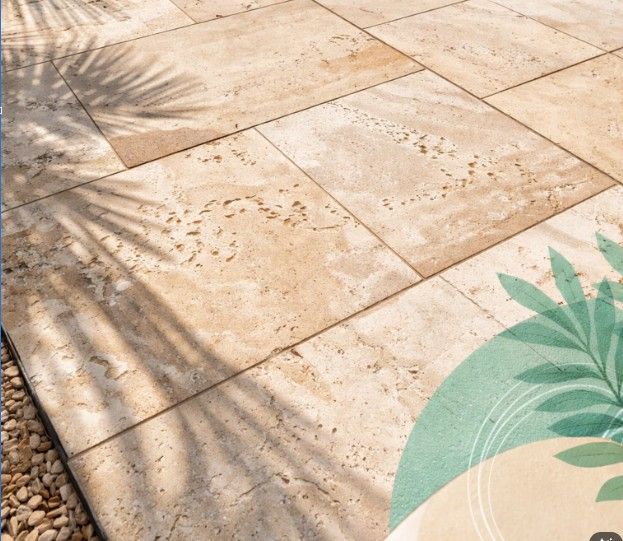
The Ultimate Guide to Travertine Sealer: Everything You Need to Succeed
Travertine is one of the most beautiful natural stones you can install around your home. Whether it's gracing your patio, surrounding your pool deck, or adding elegance to your entryway, this timeless material deserves proper care. The key to keeping your travertine looking stunning for years? A quality travertine sealer applied correctly.
This stone sealer guide walks you through everything you need to know: from understanding why sealing matters to choosing the right natural stone sealer for your project, plus step-by-step prep and application tips that deliver professional results.
Why Travertine Needs Sealing
Here's the thing about travertine: it's gorgeous, but it's also naturally porous. Those tiny holes and channels running through the stone are part of what gives travertine its unique character. Unfortunately, they also make it vulnerable to damage.
Without a protective barrier, your travertine becomes a magnet for problems:
- Stains from wine, coffee, oils, and acidic substances sink deep into the pores
- Moisture infiltration leads to mold, mildew, and efflorescence (those white chalky deposits)
- UV damage causes fading and discoloration over time
- Salt and chloride attacks deteriorate the stone, especially around pools
- General wear accelerates without surface protection
A quality travertine sealer creates an invisible shield that blocks contaminants from penetrating while allowing the stone to breathe. This breathability is critical: trapped moisture underneath can cause cracking, flaking, and internal damage that's expensive to repair.
The bottom line: sealing isn't optional if you want your investment to last.
ypes of Travertine Sealers: Which One Do You Need?
Not all sealers work the same way. Understanding the three main categories helps you choose the right product for your specific situation.
Penetrating Sealers
These soak into the stone's pores and form a protective barrier from within. Penetrating sealers are the go-to choice for most travertine applications because they:
- Preserve the natural look and feel of the stone
- Maintain slip resistance (crucial for pool decks and outdoor areas)
- Allow moisture vapor to escape while repelling surface water
- Work exceptionally well on tumbled and honed finishes
For outdoor travertine: patios, walkways, pool surrounds: a penetrating natural stone sealer is almost always your best bet.
Enhancing Sealers
Want to deepen your travertine's color and bring out those rich tones? Enhancing sealers provide protection while creating a "wet look" appearance. These work particularly well on silver travertine or tumbled finishes where you want more visual depth.
Topical Sealers
These form a protective film on the surface rather than penetrating into the stone. Topical sealers can add shine and create a barrier against dirt and stains. However, they come with significant drawbacks for travertine:
- They can become slippery when wet
- They may trap moisture beneath the surface
- They require more frequent reapplication
- Not recommended for outdoor floors or pool areas
For most homeowners, a high-quality penetrating sealer delivers the best combination of protection and practicality.
Choosing the Right Sealer for Your Project
Your sealer choice depends on three factors: location, finish, and desired appearance.
Indoor vs. Outdoor Applications
Indoor travertine in kitchens, bathrooms, and living areas faces staining from water, household products, and daily spills. A premium penetrating sealer protects against these common contaminants while keeping maintenance simple.
Outdoor travertine needs weather-resistant, UV-stable protection that can handle temperature swings, rain, pool chemicals, and constant sun exposure. Look for sealers specifically formulated for exterior use with built-in UV inhibitors.
https://www.superiorqualitycoatings.com/shop-now#!/Stonefish-Stone-Enhancer/p/510892353/category=143436757
At Superior Quality Coatings, we offer natural stone sealers designed specifically for porous materials like travertine. Our formulations provide long-lasting protection without compromising the stone's natural beauty or breathability.
7 Pressure Washing Chemical Mistakes That Are Costing You Jobs (And How to Fix Them)
Every pressure washing contractor knows the job is about more than just water and PSI. The chemicals you use: and how you use them: can make or break your reputation. The wrong product, the wrong ratio, or the wrong application method can lead to damaged surfaces, dead landscaping, regulatory fines, and unhappy customers who won't call you back.
The difference between a thriving pressure washing business and one that struggles often comes down to chemical knowledge. Here are seven common mistakes that cost contractors jobs, money, and credibility: and exactly how to fix them.
Mistake #1: Over-Reliance on Sodium Hypochlorite (Bleach)
Sodium hypochlorite (SH) has been the go-to cleaning chemical in the pressure washing industry for decades. It's effective, affordable, and readily available. But relying too heavily on bleach comes with serious downsides that many contractors learn the hard way.
The Problem: SH is notorious for damaging landscaping. One runoff mistake can kill a customer's prized shrubs or turn their lawn brown. It also poses health risks to you and your crew, requires careful handling, and can leave chlorine odors that linger for days. Worse, improper disposal can violate local environmental regulations.
The Fix: Consider hydrogen peroxide-based alternatives for jobs where bleach isn't necessary. Products like Perox 35 and Green Ox Renew deliver professional-grade cleaning power without the plant damage, harsh fumes, or environmental concerns. They break down organic matter into harmless byproducts: water and oxygen: making them safer for residential jobs near gardens, pools, and pet areas.
Mistake #2: Incorrect Dilution Ratios
Mixing chemicals by guesswork is one of the fastest ways to lose money: or damage a customer's property.
The Problem: Too strong of a mixture wastes product, increases the risk of surface damage, and can create safety hazards. Too weak of a mixture means you'll spend more time on the job, use more water, and potentially leave the customer with subpar results. Either way, your profit margin suffers.
The Fix: Always follow manufacturer dilution guidelines. Keep a laminated dilution chart in your truck or trailer for quick reference. For products like Perox 35, which comes in a concentrated 35% formula, proper dilution is essential for both effectiveness and safety. Measure accurately, document your ratios for each job type, and train your crew to do the same. Consistency in mixing leads to consistency in results.
Mistake #3: Using the Wrong Sealer for the Substrate
Sealing is often the final: and most visible: step in a job. Applying the wrong sealer to a surface is a mistake that's difficult and expensive to fix.
The Problem: A sealer designed for concrete pavers won't perform the same on natural stone. A high-gloss finish on a pool deck can become dangerously slippery. Using a solvent-based sealer where a water-based product is required can lead to adhesion failure, discoloration, or bubbling. When the sealer fails, customers blame the contractor.
The Fix: Match the sealer to the substrate and the customer's expectations. Take time to understand the differences between water-based and solvent-based options, wet-look versus natural-look finishes, and the specific requirements for brick, concrete, stone, and wood. The Superior Quality Coatings sealer line offers options for virtually every surface type, so you can select the right product for each job with confidence.
Mistake #4: Ignoring Environmental Regulations
Environmental compliance isn't optional. Ignoring the EPA's Clean Water Act and local regulations can result in hefty fines, legal action, and lasting damage to your business reputation.
The Problem: Many contractors don't realize that pressure washing wastewater is considered industrial discharge in most jurisdictions. Allowing contaminated runoff to enter storm drains, streams, or groundwater is a violation. Getting caught can mean fines ranging from hundreds to thousands of dollars: not to mention the potential loss of your business license.
The Fix: Know your local regulations and plan for proper wastewater containment and disposal. Use environmentally compliant products whenever possible. Green Ox Renew, for example, meets Clean Water Act requirements and is formulated to be non-toxic and safe for plants, animals, and marine life. Choosing compliant chemicals reduces your liability and gives you a selling point when bidding on commercial or government contracts.
Mistake #5: Not Using a Professional-Grade Stripper
Sealer removal is one of the most challenging tasks in the pressure washing industry. Attempting it with the wrong products turns a profitable job into a frustrating ordeal.
The Problem: Consumer-grade strippers often lack the strength to remove multiple layers of old sealer, especially solvent-based or acrylic products. Contractors who try to save money on stripping chemicals end up spending hours on a job that should take half the time. Incomplete removal leads to adhesion problems when the new sealer is applied.
The Fix: Invest in a professional-grade stripper designed for the coatings you encounter most often. Great White Stripper is formulated to cut through tough sealers efficiently, reducing labor time and ensuring a clean surface for resealing. The upfront cost of a quality stripper pays for itself in time savings and better outcomes. For guidance on the full cleaning and sealing process, refer to our guide to cleaning and sealing wood.
Mistake #6: Skipping Pre-Wetting or Neutralization Steps
Rushing through prep work is tempting when you're trying to finish a job quickly. But skipping essential steps like pre-wetting and neutralization leads to problems that take far longer to fix.
The Problem: Pre-wetting surrounding vegetation and surfaces helps protect them from chemical overspray and runoff. Skipping this step means you're gambling with the customer's landscaping. Similarly, failing to neutralize acidic or alkaline cleaners before sealing can cause adhesion failure, discoloration, or premature sealer breakdown.
The Fix: Build pre-wetting and neutralization into your standard operating procedure. Before applying any chemical, thoroughly wet surrounding plants, grass, and adjacent surfaces. After cleaning with acidic or alkaline products, rinse thoroughly and allow adequate dry time. If you're sealing the same day, ensure the surface pH is neutral and the substrate is completely dry. Our article on how to clean and seal surfaces the same day provides a detailed workflow.
Mistake #7: Using Harsh Chemicals That Damage Wood or Natural Stone
Not all surfaces can handle aggressive cleaning chemicals. Wood and natural stone are particularly vulnerable to damage from improper chemical use.
The Problem: Bleach and caustic cleaners can raise wood grain, cause discoloration, and break down lignin: the natural binder that holds wood fibers together. On natural stone, acidic cleaners can etch the surface, while overly alkaline products can cause staining or efflorescence. The result is a surface that looks worse after cleaning than it did before.
The Fix: Choose chemicals formulated specifically for delicate substrates. Hydrogen peroxide-based cleaners like Perox 35 and Green Ox Renew are effective on organic stains: mold, mildew, algae: without the destructive side effects of bleach or caustic soda. For wood restoration projects, these products clean effectively while preserving the integrity of the grain. Always test a small, inconspicuous area before full application on sensitive materials.
Protect Your Reputation With the Right Products
Chemical mistakes don't just cost you money on a single job. They cost you referrals, repeat business, and your reputation in the community. Professional contractors differentiate themselves by understanding their products, following proper procedures, and delivering consistent results.
Take the time to evaluate your current chemical lineup. Are you relying too heavily on bleach when safer alternatives exist? Are your dilution ratios dialed in? Do you have the right sealer for every substrate you encounter?
Building a chemical kit with professional-grade products like Perox 35, Green Ox Renew, Great White Stripper, and the full Superior Quality Coatings sealer line positions you to handle any job with confidence. Your customers will notice the difference: and so will your bottom line.
Have questions about which products are right for your operation? Contact our team for guidance on building a chemical strategy that protects your work and your reputation.
The Middle Ground: Satin Finish
Can't decide between high-gloss and completely matte? You're not alone. That's exactly why satin finishes exist.
Mahi is our satin-finish sealer that gives you the best of both worlds. You get a subtle sheen that enhances color slightly without going full "wet look." It's the Goldilocks option, not too shiny, not too flat, just right.
A satin finish works particularly well for:
- Front walkways where you want some enhancement without looking overdone
- Patios that get a lot of natural light (high gloss can look too intense in bright sun)
- Homeowners who want color enhancement but find wet look "too much"
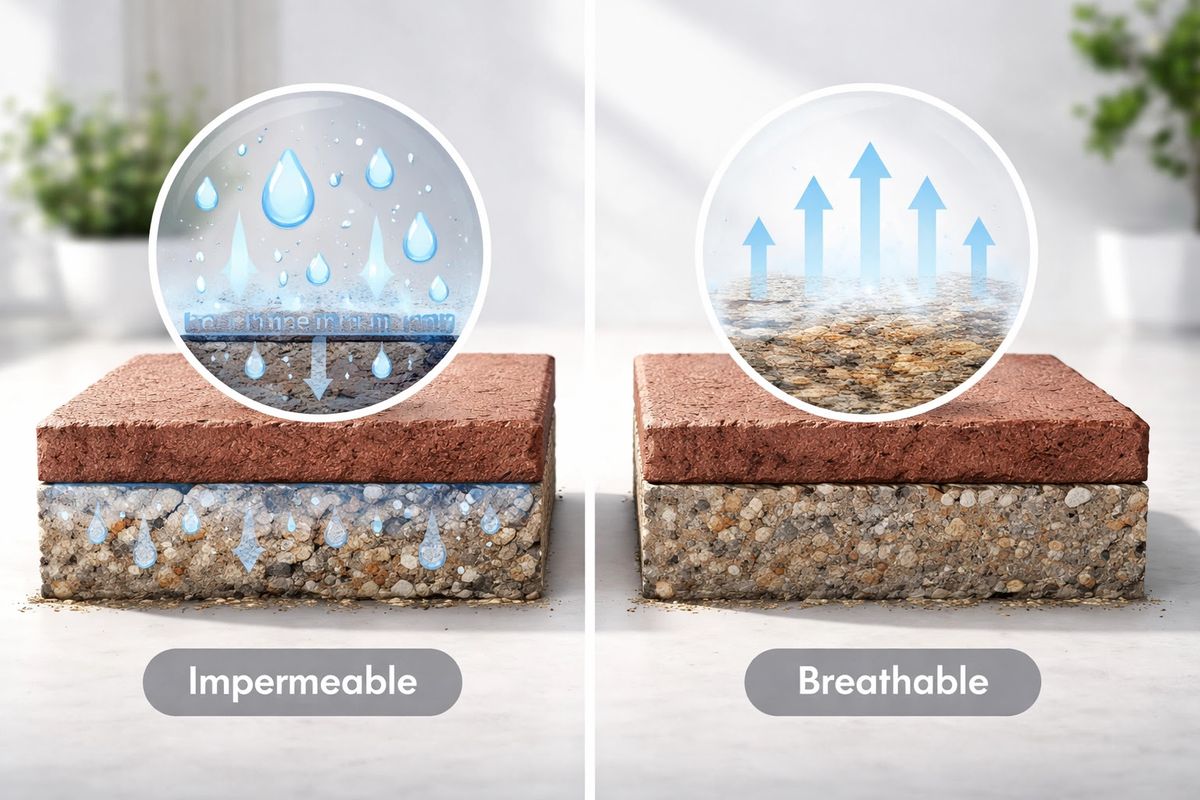
Why Water-Based Sealers Changed Everything
The breakthrough came with breathable, water-based sealer technology. Unlike solvent-based products that create an impermeable film on the surface, water based paver sealer allows moisture vapor to pass through.
Think of it like the difference between a plastic rain poncho and a high-performance Gore-Tex jacket. Both keep water out, but only one lets your skin breathe.
When a sealer is breathable, residual moisture in the paver can continue to evaporate naturally even after the sealer is applied. This eliminates the primary reason contractors had to wait, and opens the door to true same day paver sealing.
The key benefits for contractors include:
- Complete jobs in a single visit instead of two
- Reduce labor and travel costs significantly
- Take on more jobs per week with improved scheduling
- Deliver faster results that impress clients
The Products That Make Same-Day Sealing Possible
Not all water-based sealers are created equal. To seal pavers same day with confidence, you need products specifically engineered for this application. At Superior Quality Coatings, the sealer lineup includes several options designed for exactly this purpose:
Orca Plus – A high-gloss finish that's perfect for travertine, concrete pavers, and pool decks. It enhances color while allowing the substrate to breathe.
Mahi – A versatile sealer that works across multiple surface types and delivers consistent results even when applied to damp surfaces.
Ghost Fish – Ideal when you want protection without changing the appearance. This penetrating sealer disappears into the surface while providing excellent water and stain resistance.
Each of these products shares the same core advantage: they won't trap moisture. That means you can pressure wash a patio at 8 AM and have sealer down before lunch.
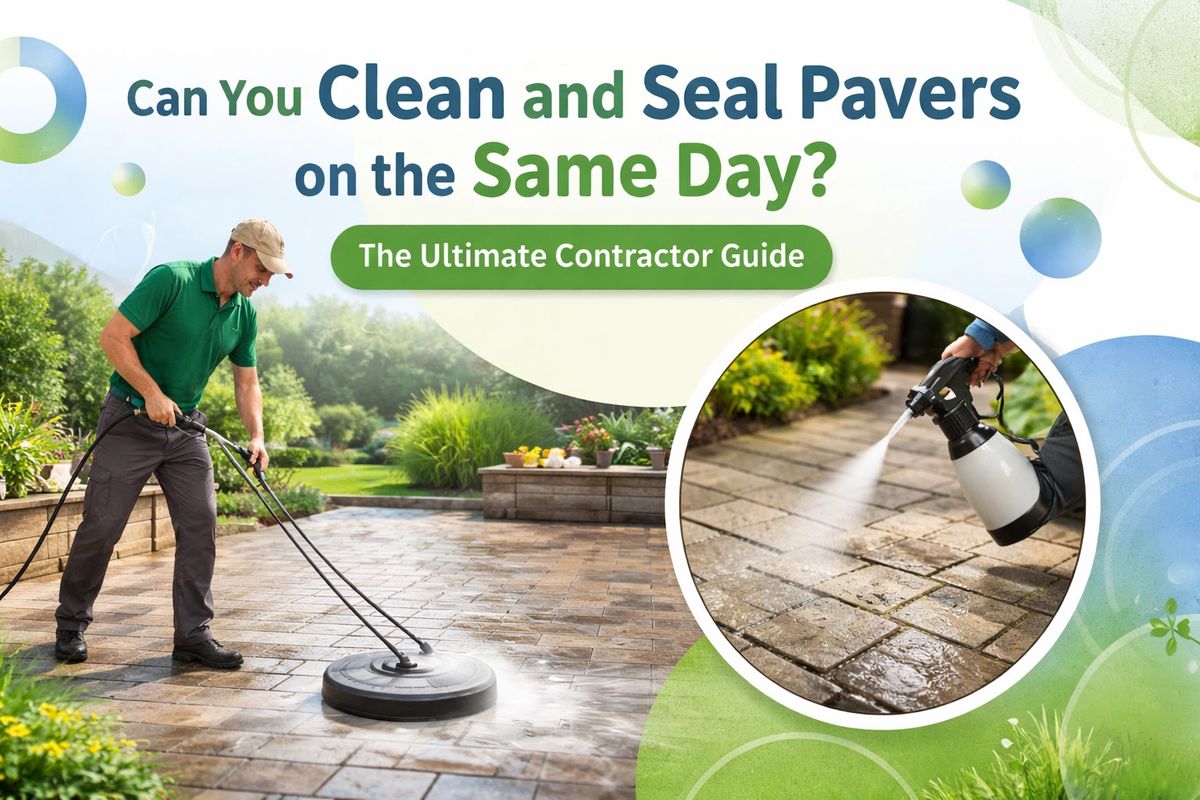
Can You Clean and Seal Pavers on the Same Day? The Ultimate Contractor Guide
If you've ever had a client ask, "Can we get this done today?", you know the pressure. The good news? Yes, you can seal pavers same day after cleaning. But here's the catch: it all comes down to the products you use and understanding the science behind them.
For years, contractors have been stuck with the traditional two-day process. Clean on day one, wait overnight for everything to dry, then seal on day two. That's two trips, two scheduling headaches, and double the labor costs eating into your margins.
It doesn't have to be that way anymore.
This guide breaks down exactly how same day paver sealing works, why water based paver sealer technology has changed the game, and what you need to know to do it right every single time.
The Problem With the Traditional Two-Day Approach
The old-school method exists for a reason. Solvent-based sealers require a completely dry surface. If there's any moisture trapped in those pavers, and there usually is after a thorough cleaning, you're looking at problems down the road.
Here's what happens when you apply solvent-based sealer over damp pavers:
- Moisture gets trapped beneath the sealer film
- White hazing or clouding appears as water tries to escape
- Peeling and delamination occur within weeks or months
- Callbacks and re-dos destroy your profit margin and reputation
That's why the industry standard became: clean, wait 24-48 hours, then seal. It works, but it's inefficient.
5 reasons cheap paver sealing is destroying your reputation
Let's talk about the elephant in the room that's crushing our industry.
Homeowners are backing away from paver sealing services—not because they don't see the value, but because they've been burned by contractors who show up, slap on a cheap coat of sealer, collect a check, and vanish before the homeowner realizes the work will fail in 6 months. These fly-by-night operators are doing more than just bad work. They're poisoning the well for every legitimate contractor trying to build a sustainable business. When a homeowner tells their neighbors "paver sealing doesn't work," that's not just one lost sale—that's an entire neighborhood that now views our services as a scam.
So today, I'm going to break down exactly why cheap paver sealing is destroying your reputation, your pipeline, and your ability to charge what quality work is actually worth.
Let's walk through each one.
Reason 1: Cheap work creates unrealistic price expectations across your entire market.
When a homeowner gets three quotes—one for $2,000, one for $3,500, and one for $800—the $800 quote doesn't just undercut you on that one job.
It resets their entire understanding of what paver sealing should cost. Now your $3,500 quote looks like highway robbery, even though you're using premium sealers, proper surface prep, and a warranty that actually means something. The problem compounds when that homeowner talks to their neighbor, who talks to their HOA board, who then expects every contractor to match that $800 price point. You're no longer competing on quality, expertise, or results. You're competing with a race-to-the-bottom pricing model that makes it impossible to deliver work that lasts 3-4 years like it should.
And here's the worst part: when that $800 job fails in 6 months, the homeowner doesn't blame the cheap contractor—they blame paver sealing as a service.
Reason 2: Failed installations turn your best marketing channel into your biggest liability.
Word-of-mouth referrals are the lifeblood of the paver restoration business.
But when cheap contractors flood the market with subpar work, word-of-mouth becomes a weapon aimed directly at your business. A homeowner who paid $800 for sealing that peeled, yellowed, or washed away isn't going to tell their neighbors "I hired the wrong contractor." They're going to say "Don't waste your money on paver sealing—it doesn't work." That message spreads fast. One bad installation can poison an entire subdivision against paver sealing services for years. And it doesn't matter that your work uses UV-resistant sealers, proper joint sand stabilization, and multi-coat application processes that actually protect pavers long-term.
The damage is already done before you even get a chance to quote the job.
Reason 3: You're forced to spend more time educating skeptical clients than actually selling your services.
Every sales conversation now starts with the same objection: "My neighbor had their pavers sealed and it looked terrible after a few months."
Instead of discussing project timelines, color enhancement options, or maintenance schedules, you're spending 30 minutes explaining why your process is different. You're showing before-and-after photos. You're explaining the difference between water-based and solvent-based sealers. You're justifying why your quote is 4x higher than the guy on Craigslist. This isn't just frustrating—it's expensive. Every hour you spend re-educating a market that's been burned by cheap work is an hour you're not closing new business, training your crew, or servicing existing clients. The cheapskate contractors aren't just stealing jobs. They're stealing your time, your energy, and your ability to grow your business efficiently.
And most of those "educated" clients still end up going with the cheaper option anyway.
Reason 4: Poor industry standards make it impossible to differentiate your premium services.
When there are no consequences for contractors who skip surface prep, use inferior products, or ignore manufacturer application guidelines, the market can't tell the difference between you and them.
Homeowners don't know what questions to ask. They don't know that proper paver sealing requires cleaning, joint sand replacement, stain removal, and often multiple coats of sealer applied at specific temperatures and humidity levels. They just see "paver sealing" and assume every contractor does it the same way. This commoditizes what should be a premium service. It makes your years of experience, your investment in quality equipment, and your commitment to using commercial-grade sealants completely invisible to the customer. You can talk about your process all day long, but if the homeowner doesn't understand why it matters, they'll always choose the cheaper option.
And the cheap contractors know this—which is exactly why they keep cutting corners.
Reason 5: Low-quality work accelerates paver deterioration, creating long-term maintenance nightmares.
Here's what most homeowners don't realize: bad paver sealing is worse than no paver sealing at all.
When a contractor uses the wrong sealer, applies it incorrectly, or skips critical prep work, they don't just create an aesthetic problem. They trap moisture under the sealer, which leads to efflorescence, mold growth, and accelerated paver breakdown. They create slippery surfaces that become liability issues around pools. They cause joint sand to wash out faster because the sealer wasn't applied properly. Now the homeowner is facing expensive repairs or even full paver replacement—all because they hired the wrong contractor. And when they call you to fix it, you're not just quoting a standard restoration job. You're quoting sealer removal, deep cleaning, possible paver replacement, and complete restoration. The job that should have cost $3,500 now costs $8,000+ because someone else did it wrong the first time.
That homeowner will never trust a paver sealing contractor again.
The bottom line: Cheap paver sealing isn't just bad for homeowners—it's an existential threat to every legitimate contractor trying to build a sustainable business in this industry.
We can't stop the fly-by-night operators from undercutting prices. But we can educate our clients, set higher standards for our own work, and make it clear that quality paver sealing done right enhances curb appeal, extends paver lifespan to 15-20+ years, and should last 3-4 years minimum between resealing. That's the message we need to spread—because if we don't, the race to the bottom will destroy this industry for all of us.
4 Easy Non-Toxic Ways To Keep Your House Clean With Our Products
Keeping our homes clean and well-maintained is a priority for all of us. However, finding non-toxic cleaning solutions that effectively remove grime and dirt can often be challenging. That’s where Superior Quality Coatings comes in. We are committed to providing eco-friendly cleaning products that deliver outstanding results. Keep reading to learn about four easy ways to keep your house clean using our range of non-toxic products.
more
The Best Eco-Friendly Cleaning Products: Superior Quality Coatings
In today's world, being environmentally conscious is more important than ever. At Superior Quality Coatings, we take pride in offering the best eco-friendly cleaning products that not only ensure a clean and healthy environment but also provide exceptional cleaning results. In this blog, we will highlight a few compelling reasons why our products stand out from the competition. Learn more, then shop today!
more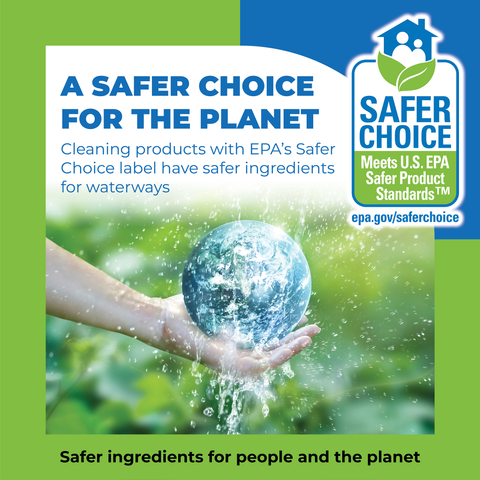
SH or not???
At Superior Quality Coatings, we're committed to providing innovative and eco-friendly cleaning solutions that not only ensure a cleaner space but also safeguard our environment. Today, we're excited to introduce GreenOx Renew, a game-changing cleaning product that revolutionizes the way we clean and disinfect while putting the planet first.
🌿 The GreenOx Renew Difference 🌿
Traditionally, sodium hypochlorite has been a popular choice for disinfection due to its effectiveness. However, it comes with significant drawbacks:
Toxicity: Sodium hypochlorite can release harmful fumes, irritate the eyes, skin, and respiratory system, making it a potential health hazard for users.
Environmental Impact: The production and disposal of sodium hypochlorite contribute to the release of harmful chemicals into our ecosystems, harming aquatic life and soil quality.
Here's why GreenOx Renew is the safer alternative to SH:
🌟 Hydrogen Peroxide Power: GreenOx Renew utilizes the power of hydrogen peroxide as its primary active ingredient. Hydrogen peroxide breaks down into water and oxygen, leaving behind no harmful residues, toxins, or fumes. It's safe for both users and the environment.
more
Commercial Wood Sealant: How to Protect and Seal Your Wood for Outdoor Use
When it comes to outdoor commercial applications involving wood, using a high-quality sealant, like Wood RX is essential. In this blog post, we will guide you through the process of effectively protecting, sealing, and waterproofing your wood using a commercial wood sealant, ensuring unrivaled quality and durability for your commercial wood projects.
more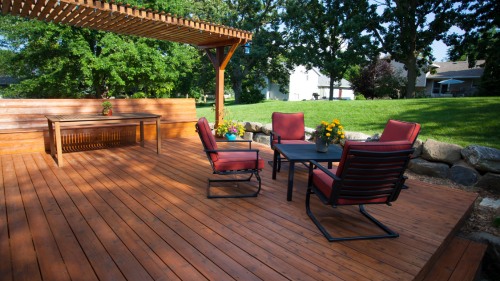
The Do's and Dont's of Sealing a Deck - A Guide by Superior Quality Coatings
Sealing a deck is essential for maintaining its longevity and appearance. To achieve the best results, it's vital to understand the do's and dont's of sealing a deck using a high-quality commercial wood sealant. In this guide, we'll discuss the key mistakes to avoid and the necessary steps to follow when sealing a deck with Superior Quality Coatings' premium commercial wood sealant, Wood RX.
more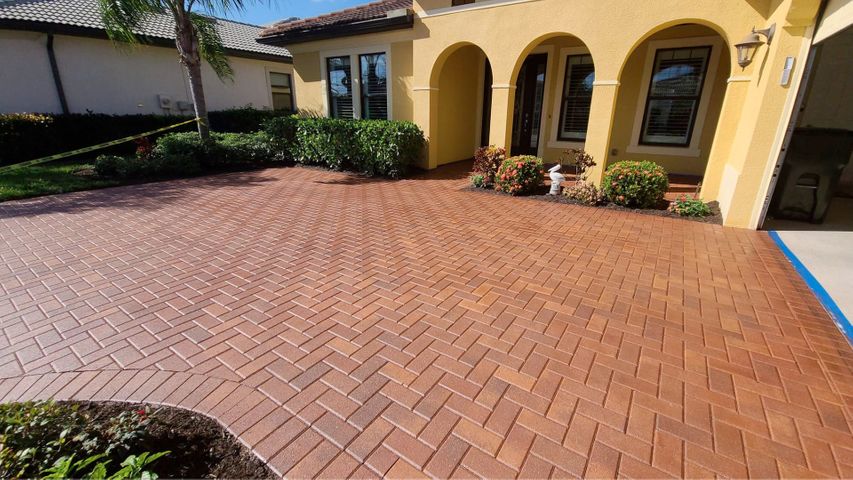
How to Clean and Seal Surfaces the Same Day
Maintaining and preserving surfaces, such as concrete floors or driveways, is essential to their longevity and aesthetic appeal. For those looking to clean and seal a surface on the same day, Superior Quality Coatings has the knowledge and expertise to achieve quality results. In this blog, we will provide you with a step-by-step guide on how to clean and seal a surface on the same day using our high-quality products. Contact us today to learn more about how we can help you!
more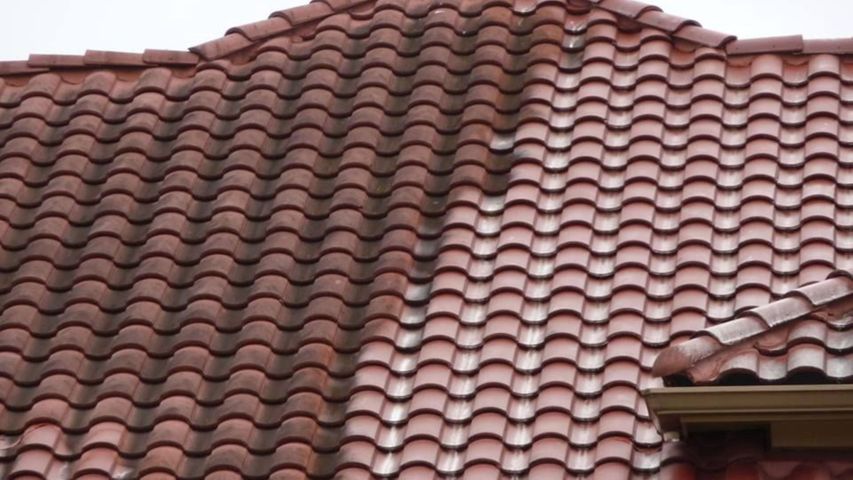
How Private Labeling Can Benefit Your Business
Private labeling is becoming increasingly popular among businesses looking to brand themselves and stand out in a competitive market. Superior Quality Coatings is one such company that offers private labeling services, allowingbusinesses to personalize their products with their own unique branding.
more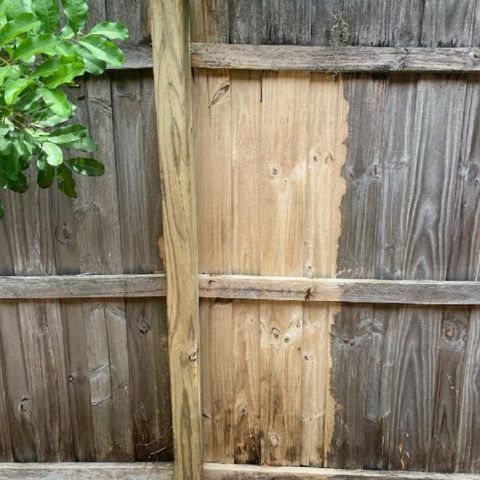
Guide to cleaning and sealing wood
A Comprehensive Guide on Cleaning and Sealing Wood with GreenOx Renew and WOOD Rx
more
How Our Sealers Stand Above The Competition
When you’re looking for sealant projects, whether they’re for an automotive project, construction project, or manufacturing operation, finding the right sealants to rely on can be integral! Superior Quality Coatings is here to help our customers achieve the best possible results on their projects with top-quality sealers that are designed for a wide range of uses and applications. Keep reading to learn more about how our sealers stand out among the competition.
more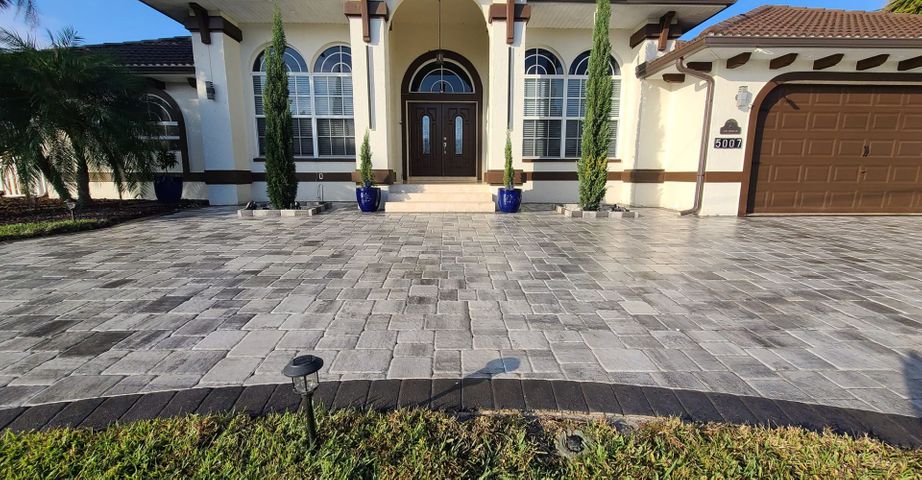
Four Benefits of Using a Quality Sealer
As the owner or manager of a property with beautiful wood surfaces, you want to ensure they remain stunning for years to come. At Superior Quality Coatings, we know all about the significance of safeguarding your wood against harsh elements that can compromise its durability and aesthetics. With our premium-quality sealer, you can envision your wood surfaces glimmering in the sunlight and withstanding the test of time. Read on to learn more about the benefits of using our superior sealers on your wood surfaces.
more
Benefits of using GreenOx Renew
The Benefits of Using GreenOx Renew: A 100% Environmentally-Friendly Multi-Surface Cleaner
Keeping our surroundings clean and free from harmful substances is vital. However, it is equally important to ensure that the products we use to clean our homes and workplaces do not harm the environment. One such product is GreenOx Renew - a hydrogen peroxide-based, multi-surface cleaner that is 100% environmentally friendly. In this blog, we will discuss the benefits of using GreenOx Renew and how it can help you maintain a clean environment while also being sustainable.
What is GreenOx Renew? GreenOx Renew is an eco-friendly, multi-surface cleaner that is a hydrogen peroxide-based. It is a highly effective cleaning solution that is free from toxic chemicals, making it safe to use in households, offices, and other commercial settings. GreenOx Renew is both an interior and exterior cleaner. Use it for whole-house cleaning from the roof to the driveway, sidewalks, pool deck, and wood or vinyl fences and decks. It is approved by the EPA Safer Choice program and it meets the standards set by the Clean Water Act. That’s right. You can use it directly over water and it will not harm any plants or aquatic life.
morePricing your jobs
A brief insight into what factors should go into creating competitive and profitable pricing on your jobs
moreEco-friendly cleaning
Green cleaning has become increasingly popular in recent years, and for good reason. Not only is it better for the environment, but it can also be safer for people and pets. One effective way to clean without harsh chemicals is by using hydrogen peroxide-based cleaners. Hydrogen peroxide is non-toxic, biodegradable, and effective at cleaning and sanitizing surfaces. Making your own hydrogen peroxide-based cleaners is also easy and cost-effective. For more information on environmentally friendly cleaning products and services, visit Superior Quality Coatings. Their website offers a wide range of eco-friendly options for both residential and commercial cleaning needs. With a commitment to sustainability and quality, Superior Quality Coatings is a great resource for anyone looking to make the switch to green cleaning practices.
more
Orca 2 Part Acrylic Urethane
Give your pavers new long-lasting life with Orca
Who doesn't love their beautiful outdoor pavers? Installing pavers in your outdoor space is a great way to add a touch of charm to your property. However, if you want your pavers to look great and last for years, you need to seal them with the right sealer. This is where Orca comes in.
Orca is a two-part acrylic urethane sealer that is designed to protect your outdoor pavers from wear and tear. It also enhances the natural beauty of your pavers and gives them a longer-lasting life. So, if you're looking for a sealer that can give your pavers a long-lasting life, Orca is the one for you.
Paver Sealing
Sealing your pavers is an important step in maintaining your outdoor space. It's a great way to protect your pavers from wear and tear and make them last longer. Sealing your pavers also enhances the natural beauty of your pavers and gives them a new look.
When it comes to sealers, there are many options available in the market today. But, if you want a long-lasting finish, you should go with Orca. Orca is a two-part acrylic urethane sealer that gives your pavers a beautiful, durable finish. It's designed to protect your pavers from wear and tear and make them last longer.
more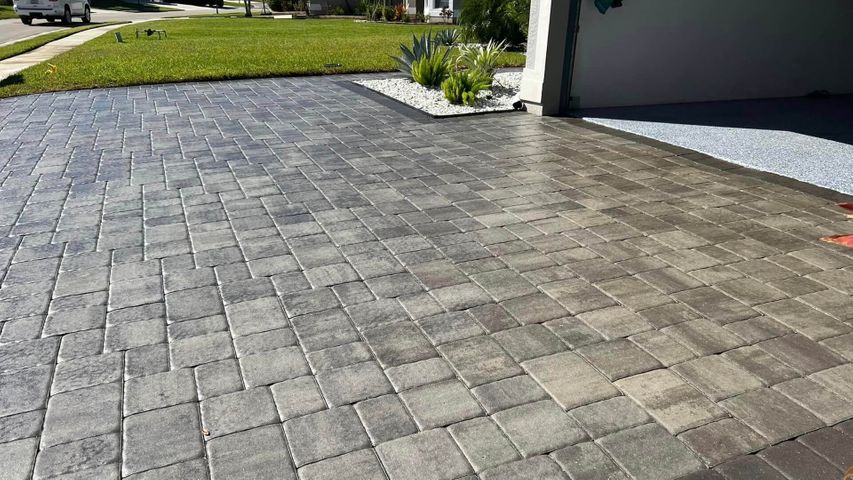
Why You Should Work With Superior Quality Coatings
Working with Superior Quality Coatings means working with a company that is dedicated to providing its customers with the best possible product. From our commitment to customer satisfaction to our environmentally friendly cleaners, concrete sealers, driveway sealer, and paver sealers, we strive to exceed every customer’s expectations. Read on to learn more about why you should work with Superior Quality Coatings for your cleaning and sealant needs.
moreWelcome
Welcome to our site! We are in the process of building our blog page and will have many interesting articles to share in the coming months. Please stay tuned to this page for information to come. And if you have any questions about our business or want to reach out to us, we would love for you to stop by our contact page.
Thank you!
more